Releasing an album is an exciting and crucial milestone for any musician or band. It involves a series of key steps that need to be carefully planned and executed to ensure a successful and impactful launch. In this comprehensive guide, we will walk you through the essential elements of releasing an album effectively.
Credit: www.amazon.com
1. Create a Strong Brand and Identity
Before releasing your album, it’s vital to establish a strong brand and identity that resonates with your target audience. This includes creating a unique logo, color scheme, and visual style that reflects your music and personality.
Consider creating a press kit with professional photos, a bio, and other promotional materials to present a cohesive image to the media and fans.
2. Produce High-Quality Music
The quality of your music is paramount to the success of your album. Ensure that your songs are well-written, well-produced, and professionally recorded. Consider working with a reputable producer or sound engineer to enhance the overall sound quality of your songs.
Credit: m.facebook.com
3. Plan Your Release Strategy
Develop a comprehensive release strategy that outlines your goals, target audience, and promotional tactics. Consider factors like release date, distribution channels, and marketing budget. Create a timeline that includes pre-release, release, and post-release activities.
Leverage social media, email marketing, and press releases to build anticipation and generate buzz around your upcoming album. Collaborate with influencers or music blogs to reach a wider audience.
4. Choose the Right Distribution Platform
Select a distribution platform that aligns with your release strategy and goals. Platforms like Spotify, Apple Music, and Bandcamp offer different features and reach. Evaluate the pros and cons of each platform and choose the one that best suits your needs.
5. Create Engaging Visual Content
Visual content plays a crucial role in promoting your album. Create engaging album artwork, lyric videos, and promotional videos to captivate your audience and enhance the listening experience. Consistent branding across all visual content will help reinforce your brand identity.
6. Build Relationships with Fans and Media
Engage with your fans and media outlets to build relationships and generate interest in your album. Host virtual listening parties, live streams, or Q&A sessions to connect with your audience on a personal level. Reach out to music journalists and bloggers for potential reviews or interviews.
7. Monetize Your Music
Explore different monetization strategies to generate revenue from your music. Consider options like selling physical copies of your album, offering merchandise bundles, or organizing virtual concerts and live streams. Create a strong call-to-action to encourage fans to support your music financially.
8. Measure Success and Iterate
After releasing your album, track key performance metrics like streaming numbers, sales figures, and social media engagement. Analyze the data to understand what worked well and areas for improvement. Use this feedback to refine your strategies for future releases and continue to evolve as an artist.
By following these essential steps and strategies, you can effectively release your album and maximize its impact on your audience. Remember to stay true to your artistic vision and engage with your fans throughout the process to create a memorable and successful album release.
Frequently Asked Questions For How To Release An Album? : Unleash Your Musical Masterpiece With These Proven Strategies
How Can I Release An Album Independently?
You can release your album independently by distributing it through online music platforms such as Spotify, iTunes, and Bandcamp.
What Are The Key Steps In Releasing An Album?
The key steps in releasing an album include selecting the release date, creating album artwork, preparing promotional materials, and selecting distribution channels.
Why Is It Important To Plan A Release Strategy?
Planning a release strategy is important to build anticipation, reach your target audience, and maximize the impact of your album release.
What Role Does Marketing Play In Releasing An Album?
Marketing plays a crucial role in creating awareness, generating buzz, and increasing the visibility of your album among music enthusiasts.
Have you ever noticed a faint hissing sound in the background of your audio recordings? This background noise is known as the “noise floor” in audio production. Understanding the noise floor is crucial for achieving high-quality sound recordings.
What is the Noise Floor?
The noise floor refers to the level of background noise present in a recording when no audio signal is present. Essentially, it is the noise generated by the recording equipment itself, such as microphones, preamps, and other audio gear. This noise floor can vary depending on the quality of the equipment used.
Managing the noise floor is essential in audio production as it can significantly impact the overall quality of a recording. A high noise floor can introduce unwanted distractions and reduce the clarity and fidelity of the audio signal. Therefore, minimizing the noise floor is crucial for achieving professional-quality audio recordings.
There are several methods that audio engineers use to reduce the noise floor in recordings:
Method
Description
Use High-Quality Equipment
Investing in high-quality microphones, preamps, and audio interfaces can help reduce the noise floor.
Proper Gain Staging
Optimizing the levels of audio signals at each stage of the recording chain can minimize noise.
Noise Reduction Plugins
Using software plugins specifically designed to remove background noise can be effective.
Monitoring the noise floor during recording and post-production is essential for ensuring clean audio recordings. By keeping an eye on the noise floor levels, audio engineers can make adjustments to minimize background noise and improve the overall sound quality.
Understanding and managing the noise floor is critical for producing high-quality audio recordings. By investing in quality equipment, employing proper recording techniques, and utilizing noise reduction tools, audio professionals can effectively reduce the noise floor and achieve pristine sound quality in their productions.
Frequently Asked Questions On What Is The Noise Floor In Audio Production?
What Is The Noise Floor In Audio Production?
The noise floor in audio production refers to the level of background noise present when recording or playing audio. This noise can come from electrical interference, equipment self-noise, or environmental factors, and it’s essential to manage it to achieve high-quality recordings.
Why Is The Noise Floor Important In Audio Production?
Understanding and managing the noise floor is crucial in audio production to ensure clean, professional-quality recordings. It directly impacts the clarity and quality of the audio, especially in quiet passages or when using microphones with high sensitivity.
How Does The Noise Floor Affect Audio Recordings?
The noise floor can introduce unwanted sounds that diminish the overall audio quality, particularly in quieter sections of the recording. It can result in a hissing or humming background that detracts from the intended audio content.
What Are Common Sources Of Noise Floor In Audio Production?
Common sources of noise floor in audio production include electronic components, microphone self-noise, recording environment acoustics, analog tape hiss, and electrical interference from nearby devices or power sources.
The world of audio has been transformed by digital technology, revolutionizing the way we listen to and interact with sound. From the early days of analog recordings to the advent of digital audio, the evolution has been remarkable. In this comprehensive guide, we will explore the intricacies of digital audio, its impact on music, and the technologies that have shaped its evolution.
Understanding Digital Audio
Digital audio refers to the representation of sound in a digital format, allowing it to be stored and transmitted using numerical values. This digital representation enables greater fidelity and versatility compared to traditional analog audio. The conversion of analog sound waves into digital signals involves a process known as digitization, which captures and encodes the audio waveform into a series of discrete data points.
One of the key advantages of digital audio is its ability to maintain high levels of fidelity and consistency, even after multiple copies or transmissions. This fidelity preservation has paved the way for widespread distribution and consumption of music, podcasts, and other audio content across various digital platforms.
Credit: www.facebook.com
The Impact of Digital Audio on Music
The introduction of digital audio technology has revolutionized the music industry, fundamentally changing the way music is produced, distributed, and consumed. Digital audio workstations (DAWs) have empowered musicians and producers to create and manipulate sounds with unprecedented flexibility and precision. This has led to the emergence of new genres, innovative production techniques, and a democratization of music production.
Furthermore, digital audio has facilitated the rise of online music streaming services, providing listeners with instant access to vast libraries of music from across the globe. This shift towards digital distribution has reshaped the music business, influencing marketing strategies, revenue models, and audience engagement. The era of digital audio has truly altered the dynamics of the music industry in profound ways.
Credit: www.amazon.com
Key Technologies in Digital Audio
1. Audio Codecs
Audio codecs are instrumental in the compression and decompression of digital audio data. They play a crucial role in minimizing file sizes without significant loss of audio quality, making it feasible to store and transmit large volumes of music and other audio content over the internet. Popular codecs such as MP3, AAC, and Ogg Vorbis have revolutionized digital audio distribution, enabling efficient streaming and downloading of music files.
2. Digital Signal Processing (dsp)
DSP encompasses a range of algorithms and techniques for processing digital audio signals. It is widely utilized in audio equipment, software plugins, and hardware devices to manipulate, enhance, and analyze audio data. From equalization and reverb to noise reduction and pitch correction, DSP has become indispensable in modern audio production, offering a myriad of creative possibilities for musicians and sound engineers.
3. Audio Interfaces
Audio interfaces serve as the bridge between analog and digital audio realms, allowing seamless connectivity between microphones, instruments, and computers. These devices facilitate high-quality audio capture and playback, offering a diverse array of input and output options for recording studios, live performances, and home studios. With advancements in audio interface technology, musicians and producers can achieve pristine sound quality and low-latency performance in their audio projects.
The Future of Digital Audio
As digital audio continues to evolve, we can anticipate further innovations and developments that will shape the future of audio technology. Advancements in artificial intelligence and machine learning are poised to revolutionize audio production, enabling automated music composition, intelligent sound processing, and personalized listening experiences.
Additionally, immersive audio technologies such as spatial audio and 3D audio are gaining momentum, offering immersive and interactive sonic experiences across various media platforms. These innovations hold the potential to redefine how we perceive and engage with audio content, transcending traditional stereo playback and unlocking new dimensions of audio realism.
Frequently Asked Questions For Digital Audio: Unlock The Power Of Crystal Clear Sound
What Is Digital Audio?
Digital audio is sound converted into electronic data for processing and storage.
Why Is Digital Audio Important?
Digital audio offers high-quality sound reproduction and easy manipulation for various applications.
How Does Digital Audio Work?
Digital audio converts sound waves into binary code for playback and editing.
What Are The Advantages Of Digital Audio?
Digital audio provides superior sound quality, easy editing capabilities, and convenient storage options.
Conclusion
In conclusion, digital audio has profoundly transformed the landscape of music, broadcasting, and audio technology. Its impact is felt across diverse domains, from creative expression and entertainment to technological innovation and user experience. As we continue to embrace the possibilities of digital audio, we are poised to witness further advancements that will shape the way we listen, create, and interact with sound in the digital age.
Granular synthesis is a revolutionary technique in sound design that involves breaking audio samples into tiny fragments called grains.
What Are Grains?
Grains are small snippets of sound, typically around 1-50 milliseconds in length, that are manipulated and rearranged to create new and unique sonic textures.
How Does Granular Synthesis Work?
In granular synthesis, these grains are played back in rapid succession, with parameters such as pitch, duration, and density adjusted to transform the original sound into something entirely different.
Key Concepts in Granular Synthesis
Grain Parameters: Parameters like size, density, and pitch play a crucial role in shaping the final output.
Granulator: The software or hardware device responsible for processing the grains and generating the sound.
Time-Stretching: The ability to manipulate the speed and duration of the grains, allowing for further experimentation.
Applications of Granular Synthesis
Granular synthesis finds applications in music production, sound design for films and games, as well as experimental audio compositions.
Benefits of Granular Synthesis
Unlimited creative possibilities
Ability to create otherworldly sounds
Facilitates sonic experimentation and exploration
Notable Artists Using Granular Synthesis
Artist
Genre
Aphex Twin
Electronic
Hans Zimmer
Film Music
Gabor Lazar
Experimental
Credit: pubs.acs.org
Future of Granular Synthesis
As technology continues to advance, we can expect granular synthesis to play an increasingly significant role in shaping the soundscape of the future.
Frequently Asked Questions For What Is Granular Synthesis? Unveiling The Intricacies And Creative Potential
What Is Granular Synthesis?
Granular synthesis is a sound synthesis method that operates on the microsound time scale.
How Does Granular Synthesis Work?
It breaks sound into tiny fragments called grains, which are manipulated and reassembled to create new sounds.
What Are The Key Benefits Of Granular Synthesis?
Granular synthesis offers unparalleled control over sound textures, enables time-stretching without pitch alteration, and allows for intricate sonic manipulation.
How Is Granular Synthesis Used In Music Production?
It is used to create atmospheric soundscapes, unique timbres, and experimental sonic textures in electronic music and sound design.
Conclusion
Granular synthesis represents a paradigm shift in sound creation, offering artists and sound designers a limitless canvas for sonic expression and experimentation.
Are you a music producer looking to enhance your sound and elevate your compositions? Look no further than Kontakt libraries. Kontakt libraries are collections of high-quality virtual instruments that can be used within Native Instruments’ Kontakt software, a powerful tool for music production.
Why Choose Kontakt Libraries?
Kontakt libraries offer a wide range of meticulously sampled instruments, including pianos, strings, synths, drums, and more. These libraries provide realistic and professional sound quality, making them essential for any music producer looking to create top-notch tracks.
Top Kontakt Libraries for Your Music Production Needs
Library Name
Description
1. Output Exhale
A vocal virtual instrument library with cutting-edge sounds and features for modern music production.
2. Native Instruments Symphony Series
Immerse yourself in orchestral sounds with this comprehensive collection of symphonic instruments.
3. Spitfire Audio Labs
Experience exquisite textures and unique sonic landscapes with this free and versatile library.
4. ProjectSAM Orchestral Essentials
Create cinematic masterpieces with this library featuring orchestral samples and textures.
5. Cinesamples Piano in Blue
Recreate the legendary sound of a classic Steinway Model D grand piano in your productions.
Credit: www.sonuscore.com
How to Choose the Right Kontakt Library for You
When selecting a Kontakt library for your music production needs, consider factors such as the genre of music you create, the instruments you use most frequently, and your budget. Additionally, read reviews and listen to demos to ensure the library aligns with your creative vision.
Credit: narothaudio.com
Benefits of Using Kontakt Libraries
Professional Sound Quality: Kontakt libraries offer top-tier sound quality that can enhance your productions.
Expanded Musical Palette: Access a wide range of instruments and sounds to diversify your music.
Creative Inspiration: Experimenting with different Kontakt libraries can spark new ideas and enhance your creativity.
Efficiency: Save time and streamline your workflow by utilizing pre-sampled instruments in Kontakt libraries.
Frequently Asked Questions Of What Are The Best Kontakt Libraries? : Unleashing The Power Of Top-notch Kontakt Libraries
What Are The Best Kontakt Libraries For Music Production?
The best Kontakt libraries for music production are those that offer high-quality sounds, a variety of instruments, and versatile functionality.
How To Choose The Right Kontakt Library For Your Needs?
When selecting a Kontakt library, consider factors such as the genre of music you produce, the instruments you require, and the quality of sound and effects.
What Are Some Popular Kontakt Libraries For Film Scoring?
Popular Kontakt libraries for film scoring include orchestral libraries, cinematic percussion, atmospheric effects, and specialty sound design libraries.
Where To Find Free Kontakt Libraries For Download?
Free Kontakt libraries can be found on various music production forums, websites, and through promotional offers from music software developers.
Conclusion
Choosing the best Kontakt libraries for your music production endeavors can significantly impact the quality and creativity of your compositions. Whether you’re looking for lush orchestral sounds, cutting-edge vocal textures, or classic piano tones, there is a Kontakt library to suit your needs. Explore the diverse world of Kontakt libraries and unlock endless possibilities in your music production journey.
As any guitarist knows, the search for the perfect tone and sound is an ongoing journey. With the plethora of guitar pedals available today, musicians have the opportunity to explore and experiment with an endless array of effects to enhance their music. In the world of guitar pedals, there are some truly strange and unique creations that have pushed the boundaries of innovation and creativity. Let’s take a look at some of the weirdest guitar pedals that have captured the imagination of musicians around the world.
1. EarthQuaker Devices Rainbow Machine
The EarthQuaker Devices Rainbow Machine is a pedal that defies traditional definitions of sound modulation. With its surreal and otherworldly effects, this pedal has earned a reputation for creating sounds that are simply out of this world. It features a pitch-shifting, polyphonic harmonizer that can produce everything from subtle shimmers to full-on sonic landscapes reminiscent of an intergalactic journey. This pedal truly lives up to its name, as it can transport your music into a realm of color and texture that is unlike anything you’ve ever heard before.
Credit: www.pinkbike.com
2. ZVEX Effects Fuzz Probe
The ZVEX Effects Fuzz Probe takes the concept of a traditional fuzz pedal and turns it on its head. What makes this pedal so unique is its interactive copper plate that responds to touch, allowing the player to manipulate the pedal’s oscillation and feedback using their hands. This hands-on approach to manipulating the fuzz and feedback creates an interactive and dynamic experience that is both unpredictable and exciting. With the Fuzz Probe, you’re not just playing a pedal – you’re engaging in a tactile and immersive sonic adventure.
3. Electro-Harmonix Mel9 Tape Replay Machine
The Electro-Harmonix Mel9 Tape Replay Machine is a pedal that allows guitarists to recreate the sounds of vintage tape-based Mellotron keyboards. By using advanced polyphonic tracking, this pedal can transform your guitar’s signal into an array of classic Mellotron sounds, including orchestral strings, flutes, and choirs. This pedal opens up a whole new world of sonic possibilities, allowing guitarists to access the lush and evocative sounds of the Mellotron in a compact and versatile stompbox.
4. Death By Audio Robot
The Death By Audio Robot is a pedal that defies categorization, offering a universe of surreal and otherworldly sounds. This pedal features a combination of pitch-shifting, waveform modulation, and filter effects that can take your guitar into uncharted sonic territory. With its interactive controls and expressive capabilities, the Robot pedal encourages experimentation and exploration, making it a favorite among musicians who are seeking to push the boundaries of traditional guitar tones.
5. Red Panda Particle Granular Delay/Pitch Shifter
The Red Panda Particle Granular Delay/Pitch Shifter is a pedal that harnesses the power of granular synthesis to create unique and atmospheric textures. By breaking down your guitar signal into tiny grains and manipulating them in real time, this pedal can produce a wide range of delay, pitch-shifting, and time-stretching effects. From shimmering ambient soundscapes to glitchy and granular textures, this pedal is a playground for sonic experimentation and sonic exploration.
Credit: www.rollingstone.com
Frequently Asked Questions Of Weirdest Guitar Pedals : Unleash Your Creativity With These Mind-bending Effects!
What Are Some Unique Guitar Pedal Designs?
Some unique guitar pedal designs include synthesizer pedals, octave pedals, and even looper pedals.
How Do Unconventional Guitar Pedals Enhance Sounds?
Unconventional guitar pedals enhance sounds by adding unique effects like fuzz, modulation, or loop functions.
Why Are Weird Guitar Pedals Prized By Musicians?
Weird guitar pedals are prized for their ability to create unique tones and inspire creativity.
Are There Any Practical Uses For Strange Guitar Pedals?
Strange guitar pedals can be used to add texture, depth, and individuality to a musician’s sound.
Conclusion
These are just a few examples of the weirdest and most innovative guitar pedals available today. Whether you’re seeking to create otherworldly soundscapes, interact with your pedals in new and exciting ways, or access vintage sounds in a modern context, these pedals offer a wealth of sonic possibilities. By embracing the unconventional and thinking outside the box, these pedals have redefined what is possible in the world of guitar effects, inspiring musicians to explore new sonic frontiers and break free from the confines of traditional guitar tones.
As an Amazon Associate I earn from qualifying purchases.
When it comes to capturing the rich and resonant tones of a guitar, having the right microphone can make all the difference. Whether you’re recording in a studio or playing live on stage, choosing the best microphone for your guitar is crucial to achieving a professional sound. Here are some of the top guitar microphones that are favored by musicians and audio engineers alike:
1. Shure SM57
The Shure SM57 is a legendary microphone known for its versatility and durability. It is a dynamic microphone that excels at capturing the nuances of acoustic and electric guitars. With its frequency response tailored for guitar applications, the SM57 delivers crisp and clear sound quality.
2. Sennheiser e609
The Sennheiser e609 is a dynamic microphone specifically designed for miking guitar cabinets. Its unique side-address design allows for easy placement on a speaker cabinet, ensuring optimal sound capture. The e609 produces a robust and punchy sound that is perfect for rock and metal genres.
3. AKG C414
The AKG C414 is a versatile condenser microphone that is highly regarded for its smooth and detailed sound reproduction. With multiple polar patterns and adjustable sensitivity levels, the C414 offers a wide range of sonic possibilities for recording acoustic guitars with exceptional clarity and depth.
4. Royer R-121
The Royer R-121 is a ribbon microphone that is prized for its warm and natural sound characteristics. Ideal for capturing the delicate nuances of acoustic guitars, the R-121 adds a touch of vintage warmth to recordings, making it a popular choice among discerning guitarists and producers.
5. Neumann KM 184
The Neumann KM 184 is a small-diaphragm condenser microphone that is renowned for its pristine audio quality and transparency. With its exceptionally low self-noise and high SPL handling, the KM 184 is perfect for recording both acoustic and electric guitars with exceptional detail and definition.
Credit: www.amazon.com
6. Audio-Technica AT4050
The Audio-Technica AT4050 is a versatile multi-pattern condenser microphone that offers exceptional audio fidelity and versatility. With its switchable polar patterns and high SPL handling, the AT4050 is well-suited for a wide range of guitar recording applications, from intricate fingerstyle playing to high-energy rock performances.
7. Rode NT5
The Rode NT5 is a pair of small-diaphragm condenser microphones that are perfect for stereo miking acoustic guitars. With their low self-noise and wide frequency response, the NT5s capture the intricate harmonics and dynamics of acoustic instruments with stunning realism and clarity.
8. Beyerdynamic M160
The Beyerdynamic M160 is a ribbon microphone that is cherished for its smooth and velvety sound quality. With its natural and warm tonal character, the M160 is an excellent choice for capturing the organic sound of acoustic guitars, adding a touch of vintage warmth to recordings.
Credit: www.practical-music-production.com
Frequently Asked Questions On What Are The Best Guitar Microphones?: Unlocking The Power Of Sound
What Are The Top Guitar Microphones For Live Performances?
The Shure SM57 and Sennheiser e906 are popular choices for their versatility and quality sound.
How To Choose The Best Microphone For Recording Acoustic Guitar?
Consider a small-diaphragm condenser like the Audio-Technica AT2021 for clear, natural sound reproduction.
What Is The Best Dynamic Microphone For Electric Guitars?
The Electro-Voice RE20 delivers excellent transient response and dynamic range, making it a top choice.
What Are The Key Features To Look For In A Guitar Microphone?
Look for high SPL handling, low self-noise, and microphone type compatibility for capturing the best guitar sound.
Conclusion
Choosing the best microphone for your guitar is essential to achieving a professional sound quality in your recordings and performances. Whether you prefer the crispness of a dynamic microphone or the warmth of a ribbon microphone, selecting the right microphone can greatly enhance the tone and texture of your guitar sound. Consider the characteristics of each microphone mentioned above and choose the one that best suits your playing style and sonic preferences.
A noise gate can improve your recordings by eliminating unwanted background noise and enhancing overall clarity. By setting a threshold level, the noise gate only allows sound above this threshold to pass through, effectively reducing interference and improving the quality of your recordings.
This results in cleaner audio tracks with minimal distractions, making your recordings sound more professional and polished. Gates are particularly useful in situations where there is background noise or hissing present. This allows you to achieve a cleaner and more professional final product.
Whether you are recording music, podcasts, or voiceovers, a gate can significantly elevate the quality of your audio recordings.
Credit: www.izotope.com
The Benefits Of Using A Noise Gate
Using a gate can elevate the quality of your recordings by having more control over unwanted background noise. Let’s explore the benefits of incorporating a gate into your recording setup.
Reducing Background Noise
A gate helps eliminate background noise during silent passages, providing a cleaner and more professional sound.
Improving Clarity And Definition
By cutting off unwanted noise when the input falls below a set threshold, a gate enhances clarity and definition in recordings.
Credit: flixier.com
Implementing A Noise Gate Effectively
Improve the quality of your recordings by effectively implementing a gate. This audio effect helps eliminate unwanted background noise, resulting in cleaner and more professional-sounding audio. By setting the threshold appropriately, a gate can significantly enhance the overall clarity of your recordings.
Understanding Threshold And Release Settings
Setting the threshold appropriately determines when the gate will kick in.
Adjusting release settings controls how quickly the gate closes after the signal drops below the threshold.
Threshold and release settings play a crucial role in how effectively a gate operates.
Applying Noise Gates In Different Recording Situations
Gates can be used to clean up recordings with unwanted background noise.
For instruments with sustain, adjusting the release time is essential to avoid cutting off notes prematurely.
Live recordings benefit from gates to reduce stage noise between musical passages.
Choosing The Right Noise Gate For Your Setup
Choosing the Right gate for Your Setup
Hardware Vs. Software Noise Gates
When selecting a gate for your recording setup, one of the primary considerations is whether to opt for a hardware or software solution. Hardware gates are physical devices that can be integrated into your signal chain, offering dedicated processing capabilities. On the other hand, software gates can be utilized within your digital audio workstation (DAW) as plugins, providing flexibility and convenience. Both options have their advantages, and the choice depends on your specific needs and workflow.
Considerations For Different Instruments And Vocals
Each instrument and vocal source has its own dynamics and noise characteristics, influencing the type of gate that best suits your recording setup. Guitars and bass may require a gate tailored to manage their sustained notes and nuances. Meanwhile, drums and percussion can benefit from a gate that handles transient spikes effectively. Vocals demand a gate that can delicately suppress background noise during silent parts without affecting the natural timbre of the voice. Understanding the unique requirements of each source allows you to choose a gate that optimally enhances your recordings.
Common Mistakes When Using A Noise Gate
Improve your recordings with a gate, but watch out for common mistakes. For best results, set the threshold carefully to avoid cutting off desired sounds. Adjust attack and release times for a natural, professional sound.
Overuse Leading To Unnatural Sound
One common mistake that many people make when using a gate is overusing it. This can result in an unnatural and robotic sound. It’s important to remember that the purpose of a gate is to reduce unwanted noise and create a cleaner recording. However, using it excessively can strip away the natural dynamics of your audio and make it sound sterile and lifeless.
Instead, strike a balance: When using a gate, it’s crucial to find the right threshold and release settings that work for your specific recording. Keep in mind that the goal is to eliminate unwanted noise while preserving the natural character and dynamics of the sound. Gradually adjust the settings to achieve the desired level of noise reduction without sacrificing the overall quality and authenticity of your recordings.
Neglecting Pre- And Post-processing
Another common mistake in using a gate is neglecting pre- and post-processing tasks. While a gate can significantly improve your recordings, it cannot do all the work on its own. Properly preparing your audio before applying the gate and applying necessary processing afterward are essential for achieving the best results.
Pre-Processing Tasks
Post-Processing Tasks
Ensure good microphone placement and technique to minimize background noise.
Use a high-quality pop filter to reduce plosive sounds.
Consider using a dedicated vocal booth or acoustic treatment in your recording space to minimize environmental noise.
Apply equalization (EQ) to balance the frequencies and enhance the overall sound.
Use compression to control dynamic range and add warmth to your recordings.
Add reverb or delay to create a sense of space and depth.
Remember: A noise gate is just one piece of the puzzle. Taking care of these pre- and post-processing tasks will optimize your recordings and ensure a more professional and polished final result. By combining these techniques, you can achieve a clean and sonically pleasing audio recording.
Creative Uses Of Noise Gates In Music Production
Explore the transformative potential of noise gates in music production. Enhance your recordings by effectively eliminating unwanted background noises, ensuring a cleaner and more polished sound. Noise gates offer precision and control, allowing you to craft professional-grade tracks with ease.
Achieving Artistic Effects With Sidechain Routing
In music production, noise gates aren’t just for removing unwanted background noise. They can also be used in creative ways to add depth and character to your recordings. One of the popular techniques is using a noise gate in combination with sidechain routing.
Dynamic Control In Electronic Music Production
Electronic music often involves complex layers of sounds that need careful control to achieve the desired impact. This is where noise gates can prove to be invaluable. With their ability to precisely control the dynamics of a sound, noise gates can help shape the music and give it that professional polish.
Rhythmic Pumping With a Sidechained Gate
When it comes to electronic music production, sidechain routing is a powerful tool that can create exciting and unique effects. By using a noise gate in a sidechain configuration, you can create a rhythmic pulsing effect that is commonly heard in genres like EDM and techno. The noise gate acts as a virtual volume control, opening and closing the audio signal based on the input from another audio source. The beauty of sidechain routing is that it allows you to create a “pumping” effect, where the music breathes and moves in sync with the rhythm of another element. For example, you can use a kick drum as the sidechain trigger for the noise gate on a bass track. Every time the kick drum hits, the noise gate on the bass track opens up. This allows the bass to be heard.
When the kick drum stops, the noise gate closes, creating a tight and controlled sound. But sidechain routing with noise gates goes beyond just the rhythmical effect. It can also be used to create interesting sonic textures and enhance certain elements of your music.
Sidechain Gating on Vocals, Pads and Guitars
For instance, you can apply sidechain compression on a vocal track. This makes it stand out more prominently when the instrumental parts are playing. This technique is commonly used in modern pop and electronic music to give the vocals a sense of presence and impact. In addition to vocals, sidechain routing with noise gates can also be applied to other elements like pad synthesizers, pianos, or guitars to create unique sonic effects and enhance the overall mix. By selectively controlling the dynamics, you can create a dynamic and lively sound that adds depth and interest to your recordings. So, if you’re looking to take your music production skills to the next level, consider experimenting with noise gates and sidechain routing. With a little creativity and experimentation, you can achieve stunning artistic effects that will make your recordings stand out from the crowd.
Credit: krisp.ai
Frequently Asked Questions For How Can A Noise Gate Improve My Recordings?
Should I Use A Noise Gate When Recording?
Using a noise gate when recording can help minimize unwanted background noise. It’s particularly useful for capturing clean audio in environments with distractions. However, it’s important to adjust the settings carefully to avoid cutting off desired sounds.
What Is A Noise Gate Good For?
A noise gate is useful for reducing unwanted background noise in audio recordings. It cuts off audio signals below a certain threshold, allowing only the desired sound to pass through. This helps improve the clarity and quality of the audio.
What Is The Best Setting For A Noise Gate?
The best setting for a noise gate depends on the specific audio environment and equipment being used. It’s important to adjust the threshold to cut out unwanted noise while still allowing desired sounds to pass through. Experiment with different settings to find the optimal balance.
Do Noise Gates Affect Tone?
Noise gates can affect tone by altering the decay of sustained notes. They can also impact the natural dynamics and character of the sound. Adjusting the threshold and release settings can help minimize tone changes. Experimenting with different configurations will help find the best balance between noise reduction and preserving tone.
Conclusion
Enhancing your recordings with a noise gate can significantly improve their overall quality. With its ability to reduce unwanted background noise, a noise gate ensures that your recordings are clean and professional-sounding. By incorporating this powerful tool into your recording process, you can elevate the sound quality and clarity of your music or audio productions.
Loudness streaming refers to the process of delivering audio content over the internet on platforms such as music streaming services, video streaming platforms, and podcasts. With the rise in popularity of these platforms, it has become crucial to ensure consistent loudness levels across different devices and content, leading to the emergence of loudness normalization and measurement techniques.
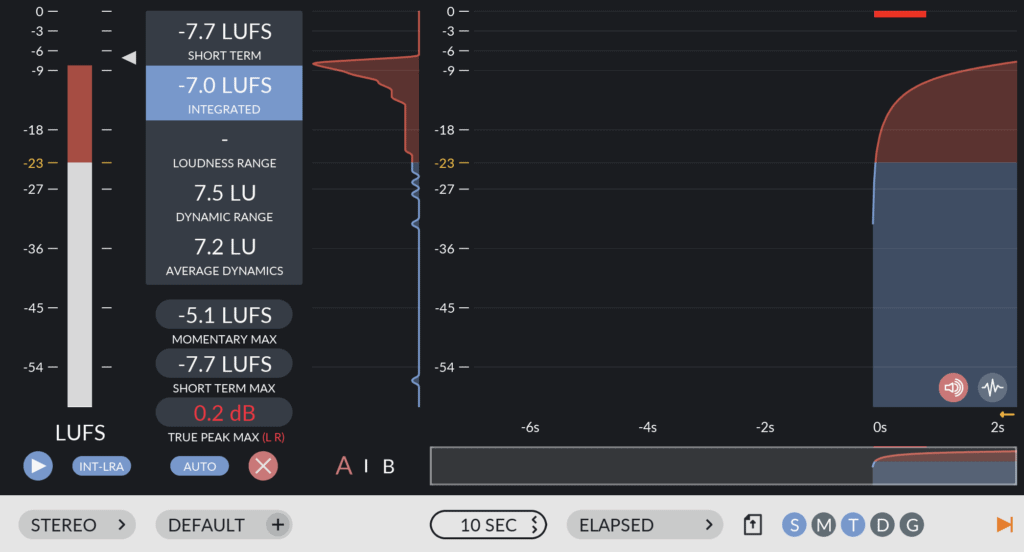
One such technique used to measure loudness is LUFS (Loudness Units Full Scale). LUFS is a standard measurement unit that determines the perceived loudness of audio content. It takes into account both the average and dynamic range of the audio signal to provide a more accurate representation of loudness.
How is Loudness Measured?
Measuring loudness involves analyzing the audio signal and quantifying its perceived loudness level. This is important because different audio content can have varying loudness levels, and inconsistent loudness between tracks can disrupt the listening experience.
Traditional measurement methods, such as peak normalization based on the highest peak level in the audio, do not accurately reflect how loud the audio actually sounds. LUFS, on the other hand, considers human perception and takes into account various factors to provide a more accurate loudness measurement.
The loudness measurement process involves analyzing the audio signal using filters that mimic the human ear’s frequency response. These filters divide the audio signal into different frequency bands, and the energy of each band is measured over time.
Once the audio signal has been divided into frequency bands, it is weighted according to the equal loudness contour, which represents how the human ear perceives different frequencies at different sound pressure levels. This weighting compensates for the ear’s non-linear response to different frequencies.
The weighted energy of each frequency band is then averaged over time to calculate the Integrated Loudness. This value is expressed in LUFS and represents the perceived loudness of the entire audio track. LUFS measurements also take into account short-term and momentary loudness levels to capture both the average and dynamic loudness of the content.
Credit: www.masteringthemix.com
Credit: www.edmprod.com
The Importance of LUFS in Loudness Streaming
Loudness normalization using LUFS has become a crucial aspect of streaming platforms to ensure a consistent listening experience for users. Without loudness normalization, users may experience abrupt changes in volume when switching between tracks, causing frustration and discomfort.
By implementing loudness normalization using LUFS, streaming platforms can maintain a consistent loudness level across all content. This means users can enjoy their favorite tracks, podcasts, and videos without constantly adjusting the volume.
Advantages of LUFS Measurement
LUFS measurement offers several advantages over traditional peak level normalization:
Accuracy: LUFS provides a more accurate representation of perceived loudness, taking into account human perception and dynamic range.
Consistency: With LUFS loudness normalization, content from various sources can be played back at a consistent loudness level, regardless of the original recording levels.
Cross-Platform Compatibility: LUFS-based loudness normalization ensures that audio content sounds consistent across different devices and platforms.
User Satisfaction: By eliminating drastic volume changes between tracks, users can enjoy a seamless listening experience without constantly adjusting the volume.
Frequently Asked Questions On What Is Loudness Streaming And How Is It Measured With Lufs?
What Is Loudness Streaming?
Loudness streaming refers to the consistent volume level of audio during playback on digital platforms.
Why Is Loudness Streaming Important?
Maintaining a consistent loudness level ensures a pleasant and uniform listening experience for the audience.
How Is Loudness Measured With Lufs?
Loudness is measured using LUFS (Loudness Units Relative to Full Scale), which quantifies perceived loudness levels in audio content.
What Role Does Lufs Play In Audio Mastering?
LUFS helps audio engineers optimize the loudness of audio content for various streaming platforms, ensuring consistent playback volume.
Conclusion
Loudness streaming and the measurement of loudness using LUFS have revolutionized the way audio content is delivered and consumed on streaming platforms. LUFS provides a more accurate measurement of perceived loudness, ensuring a consistent and enjoyable listening experience for users.
By implementing loudness normalization based on LUFS, streaming platforms can eliminate the annoyance of inconsistent volume levels and allow users to focus on the content they love. As a result, content creators and consumers alike can benefit from a more enjoyable and immersive audio experience.