Categories
Archive

Basics Of Ghost Production

Ghost production refers to the process of producing music anonymously for others. It involves a producer creating music for a client who is credited as the artist.

Ghost production has become increasingly popular in the music industry for various reasons. Some artists lack production skills, while others prefer to remain anonymous to avoid the pressure and attention that comes with being in the limelight. We will discuss the basics of ghost production, including its history, benefits, and challenges.

We’ll also delve into what makes a good ghost producer and provide tips for artists looking to hire one.

What Is Ghost Production?

Ghost production is the process of creating and producing music without taking credit for it. It often involves unsigned artists who have their work produced and marketed under a different name, allowing them to maintain anonymity and focus on their craft without the pressure of notoriety.

The Definition Of Ghost Production

Ghost production is a form of music production where a producer creates a musical track on behalf of another music artist who then releases the track under their own name. The producer remains anonymous and takes no credit for their work. This type of production is quite common in the music industry and has been around for many years. The process of ghost production starts with an artist or DJ approaching a producer with a specific request for a musical track. The producer then creates the track and delivers it to the artist, who can then release it under their own name. The producer is often paid upfront for their work and takes no royalties or credits for the track.

Why Do Artists Use Ghost Producers?

Artists may use ghost producers for a variety of reasons. Firstly, it saves them time and effort, as they can focus on performing and promoting the tracks without having to spend time creating them. Secondly, it allows them to release a high-quality track without the skills and knowledge required to create one themselves. Finally, it helps them maintain their artistic image by ensuring that the quality of their music is consistent.

Is Ghost Production Legal?

Ghost production is a legal practice, and there is no law that prohibits artists from using ghost producers. However, it is worth noting that some music fans and critics may view the practice negatively and consider it to be disingenuous. It is up to the artist to decide whether they are comfortable with using ghost producers or not.

The Pros And Cons Of Ghost Production

There are pros and cons to using ghost production. Some of the advantages include saving time and effort, providing high-quality music, and enhancing an artist’s artistic image. However, some of the disadvantages include a lack of creative control, the potential for negative reactions from fans and critics, and the cost of hiring a skilled ghost producer. Overall, ghost production is a common and legal practice in the music industry that can provide many benefits to artists and producers alike. However, it is important to consider the pros and cons carefully before deciding whether to use ghost production or not.

Why Artists Choose Ghost Production?

Why Artists Choose Ghost Production?

Ghost production has become a popular practice in the music industry in recent years. Mainly, upcoming and established artists use ghost production services for creating their music releases. Ghost production involves a talented producer working with an artist to create a track on behalf of the artist, who then takes credit for the release. So, why do artists choose ghost production?

Save Time And Money

In today’s fast-paced music industry, artists need to release new music frequently to maintain their popularity. Hiring a ghost producer can save an artist time and money. The producer takes care of all the music production tasks, such as composing, arranging, mixing, and mastering. It allows the artist to focus on their performance and promotion of the track. In addition, ghost production services are often affordable compared to hiring a full-time producer.

Access To Professional Production Skills

Ghost production allows artists to work with top-level producers who have extensive experience in the industry. These producers can help elevate an artist’s sound to a more professional level. They bring knowledge, skills, and techniques that many artists may not possess. The producer also ensures that the final product meets industry standards and quality. Working with a ghost producer will give an artist a competitive edge in the industry and increase the chances of their success.

In conclusion, ghost production is a valuable service that artists use to save time, money, and access professional production skills. Hiring a talented ghost producer can help artists create high-quality releases that will resonate with their audience and keep them relevant in the competitive music industry.

How Does Ghost Production Work?

Ghosts are real, but not in the way you might be thinking. Ghost producers are music producers who create tracks for other artists anonymously. In this post, we’ll break down the basics of ghost production, starting with how it works.

Finding A Ghost Producer

Finding a ghost producer can be tricky, but not impossible. Many ghost producers advertise their services online, either on their own websites or on freelance platforms. You can also network with other musicians to see if they know of any good ghost producers.

Agreeing On Terms

Once you’ve found a ghost producer, you’ll need to agree on terms. This includes how much you’ll pay the producer, who will retain the rights to the finished track, and whether or not the producer will receive credit for their work.

The Production Process

The production process for ghost production is similar to traditional music production. The artist will typically provide the ghost producer with a general idea of what they want the finished product to sound like, including any specific motifs or themes. The ghost producer will then create a track based on this input, sending drafts to the artist for feedback and revisions.

Once the final track is completed, the artist will pay the ghost producer and receive the finished product. From there, the artist can release the track under their own name, while the ghost producer remains anonymous.

Ghost production can be a great way for artists to get high-quality tracks without having to spend time and resources on producing them themselves. By working with a ghost producer, artists can focus on other aspects of their careers while still putting out great music.

Legal And Ethical Issues

Ghost production is a common venture in the music industry where producers create songs and sell them to other artists. However, it raises both legal and ethical concerns about who owns the rights to the music and whether the original creator should remain anonymous.

When it comes to music production, the use of ghost producers has become a common practice for several reasons, including keeping the artist’s name on the front while someone else does the actual work. Ghost production raises some legal and ethical concerns that must be addressed to avoid future issues. Here are some basic legal and ethical issues related to ghost production:

Rights And Ownership

One of the major legal concerns when it comes to ghost production is the ownership rights of the final output. Ghost production is usually done on a work-for-hire basis, which means the ghost producer owns no rights to the final product and cannot make decisions regarding the commercial use of it. In the case of disputes related to rights and ownership, a written contract is essential, stating the specifics of the project.

Transparency And Disclosure

Ghost production can have ethical implications as well, primarily when the audience is unaware of the contribution of ghost producers. The most ethical approach in such situations is to disclose the use of ghost production, so the audience knows who the actual producer is. The implication does not mean that the artist must label each track or song where they used ghost production, but they should be transparent with their fans and followers that they use someone else’s work to create their music.

Conclusion

In conclusion, ghost production can be a useful tool for artists and producers alike, but it is essential to consider and address the legal and ethical implications. By prioritizing transparency and ownership rights from the beginning of the project, artists can ensure that ghost production is both legal and ethical.

Benefits And Drawbacks Of Ghost Production

Ghost production can offer benefits like time-saving, access to talented producers, and the ability to focus on other aspects of music creation. However, it can also include drawbacks such as lack of creative input and ethical concerns. Overall, it’s important to weigh the pros and cons when considering ghost production.

Benefits And Drawbacks Of Ghost Production: Ghost production is a popular music production process that allows a producer to create music for another artist without receiving any public credit. This process offers a lot of benefits, but it also has some drawbacks. In this post, we’ll discuss the advantages and disadvantages of ghost production, so you can decide if it’s the right choice for your music career.

Advantages Of Ghost Production:

Ghost production has several benefits, which are: – It saves time: Ghost production enables artists to save a lot of time that they would have spent learning how to produce music. – It helps improve the quality of music: Professional producers with years of experience can create high-quality music that may not have been achievable by the artist alone. – Musicians can focus on their strengths: Ghost production allows artists to concentrate on writing lyrics and singing, while leaving the music production process to the professionals. – It provides room for experimentation: Ghost producers can try out different sounds and approaches to create unique music that suits the artist’s style.

Disadvantages Of Ghost Production:

Although ghost production has some advantages, it also has some drawbacks, which include: – It can be expensive: Ghost production services provided by professional producers come at a premium price, particularly if the producer is experienced and has a proven track record. – The artist may not have ownership of the finished product: As the produced music belongs to the ghost producer, the artist has no ownership rights to the finished product. – It can generate negative public relations: Ghost production is controversial as fans don’t like to think that their favourite artists have relied on someone else, leading to a negative public relations situation. – There is less control over the finished product: The artist has little to no say over the final product, meaning that the song might not turn out as expected. In conclusion, ghost production has its benefits, but it also has some drawbacks. Weigh the pros and cons before deciding on using this process because as an artist, it’s vital to discover what works best in terms of music production.

Basics Of Ghost Production

Credit: innovationsounds.com

Ghost Production In Today’s Music Industry

Ghost production has become increasingly common in today’s music industry, where producers create tracks for artists to release under their own name. This type of production is often kept a secret to maintain the appearance that the artist created the music, and it has sparked debate about its ethics in the industry.

The term “ghost production” refers to the act of creating music for another person without receiving credit or recognition for the work. In today’s music industry, ghost production has become a widespread practice. Many popular musicians and producers use ghost producers to create music that they release under their own name. Ghost production has gained significant attention, as controversy and misconceptions surround the practice. In this article, we will explore the basics of ghost production, focusing on trends, controversies, and the impact of ghost production on today’s music industry.

Trends In Ghost Production Usage

Ghost production has become increasingly popular in the music industry. It has provided an efficient solution for producing music when established artists find it challenging to keep up with the demand for new music. As a result, they need to outsource this work to maintain their reputation and stay relevant. Moreover, new musicians with weaker skills, tendency often seek out experienced producers when starting their careers as they struggle to produce high-quality music on their own. In addition, increased access to affordable music-making software and the rise of social media platforms has contributed to this popularity.

Controversies Around Ghost Production

Ghost production has sparked many debates among experts and music aficionados. Some argue that this practice perpetuates a lack of proper artist recognition. Many feel that music created and released under somebody else’s name is dishonest and misleading. Many fans believe that purchasing a track created by a ghost producer is a waste of money, and they do not support artists who use ghost producers. On the other hand, others argue that ghost production provides a plausible marketing strategy for the music industry in the digital era. They contend that the real value of a track lies in its ability to make an impact and resonate with the audience rather than its creator. In conclusion, ghost production has come under scrutiny and criticism in recent years as its prevalence within the music industry increases. However, it remains a common and necessary practice for many artists to keep their music careers afloat. While some view it as a deceitful practice, ghost production continues to be a feasible option to meet the high demand for quality music in today’s fast-paced music industry.

Basics Of Ghost Production

Credit: www.linkedin.com

Frequently Asked Questions Of Basics Of Ghost Production

How Do I Start A Ghost Production?

To start a ghost production, first define your niche and target audience. Create a unique brand and style, set your rates, and build a portfolio of work. Use online platforms to promote your services and network with potential clients. Communication is key to ensure that both parties are satisfied with the final product.

How Does Ghost Production Work?

Ghost production is a process in which a music producer creates a track on behalf of another artist. The artist pays the producer a fee for creating the music, and then the artist releases the track under their own name.

The producer remains anonymous and does not take credit for the work.

Is It Legal To Ghost Produce?

Ghost producing is not illegal, but it can lead to legal issues if you do not properly credit the original creator of the work. It is important to have clear agreements and contracts in place to avoid any potential legal disputes.

How Much Should I Charge For Ghost Production?

The amount you should charge for ghost production depends on your experience, skills, and the complexity of the project. Ghost producers typically charge a flat fee, which ranges from $500 to $10,000 per track. Factors such as the artist’s popularity, the genre of the music, and the producer’s reputation can also affect pricing.

It’s best to research industry standards and negotiate with clients based on your expertise and the project’s requirements.

Conclusion

Ghost production is definitely a lucrative opportunity for both new and experienced music producers. It enables them to create outstanding tracks for renowned artists while keeping behind the curtains. By understanding the basics of ghost production, you can start your journey in the industry with ease and with all the right knowledge.

Remember, ghost production demands hard work, dedication, and professionalism. Keep honing your craft, build connections, and don’t forget the importance of communication with your clients. With all these skills in your arsenal, you can increase your chances of becoming one of the most sought-after ghost producers in the music industry.

Categories
Archive

Vocal Eq Compression

Vocal Eq compression enhances the quality of vocals by balancing loudness and reducing dynamic range. This technique minimizes inconsistencies in vocal performance and results in a polished, professional sound.

Vocal EQ compression is a popular audio engineering technique used to improve the quality and clarity of recorded vocals. By using a combination of equalization and compression, sound engineers and producers can balance the loudness and reduce the dynamic range of a vocal track.

This process helps to minimize any inconsistencies in the vocal performance, resulting in a polished and professional sound. EQ compression can be used to add warmth, depth, and character to a vocal recording and is an essential tool for any audio professional. We’ll delve deeper into vocal EQ compression and discover how this technique can help you achieve a better-sounding recording.

Understanding Vocal Eq

Vocal EQ compression is an essential technique for enhancing the quality of recorded vocals. By balancing the frequencies and dynamics of the vocal track, you can achieve a polished, professional sound that stands out in any mix. With the right equipment and a good ear, anyone can learn how to use EQ compression effectively.

Understanding Vocal EQ Vocal EQ is an essential aspect of music production, which involves tweaking the frequency of the recorded vocals to enhance clarity, intelligibility, and tone. It helps to balance the sound and make the vocals sit perfectly in a mix. Vocal EQ can help remove unwanted frequencies, add presence and warmth, or shape the timbre of the singer’s voice to achieve the desired effect. In this post, we’ll discuss what vocal EQ is, its importance in music production, and how to use it effectively. Defining Vocal EQ In music production, EQ stands for equalization, which is a tool used to adjust the volume of individual frequencies in an audio signal. Vocal EQ refers to the process of using an equalizer to alter specific frequencies in the range of a human voice. For instance, boosting the mid-range frequencies of a vocal track can help bring out the clarity and detail in the vocals. Similarly, cutting out the low frequencies can remove rumble and other unwanted noises in the recording. Importance of Vocal EQ in Music Production Vocal EQ is crucial in music production because it helps to enhance the quality of the vocals and make them stand out in the mix. Proper EQ can provide the necessary balance and separation between different elements of the track and contribute to the overall clarity and intelligibility of the mix. When vocals are not well EQ’d, they can sound muffled, muddy, or lost in the mix, thus affecting the overall quality of the track. Using Vocal EQ for Tonal Shaping Vocal EQ can also be used for tonal shaping, which involves fine-tuning the frequency response of a singer’s voice to achieve the desired effect. For instance, boosting the high frequencies can add airiness and brightness to the vocals, while attenuating the mid-range can create a warm, silky tone. Conversely, a drastic cut in the high frequencies can create a dull, muted sound, while boosting the low-end can add depth and body to the vocals. Conclusion In conclusion, vocal EQ is an essential tool in music production, which can help enhance the quality of the vocals and make them sit perfectly in the mix. By understanding the basics of vocal EQ, you can achieve more significant control over the frequency response of a singer’s voice and create more professional-sounding tracks. Remember that each voice is unique, and finding the right EQ settings may take some experimentation. Practice, listen, and adjust until you find the perfect vocal EQ for your project.

Vocal Eq Compression

Credit: www.audio-issues.com

Types Of Vocal Eq

Equalization, or EQ for short, is a valuable tool when it comes to tweaking the sound of vocals. By adjusting the balance between different frequency ranges, you can add warmth, clarity, and depth to a recording. There are three main types of EQ used with vocals: graphic EQ, parametric EQ, and dynamic EQ. Each of these types of EQ has its own strengths and weaknesses, so let’s explore them in more detail.

Graphic Eq

Graphic EQ is perhaps the most well-known type of equalizer. It displays a set of fixed frequency bands, typically ranging from around 20 Hz to 20 kHz, on a visual graph. Each band can be adjusted individually, allowing you to boost or cut a specific range of frequencies. Graphic EQ is particularly useful when you need to tackle broad tonal issues, such as removing unwanted low-end rumble or taming harsh high frequencies.

Parametric Eq

With parametric EQ, you have more control over which frequencies you adjust and how you adjust them. Instead of preset frequency bands, parametric EQ lets you set the center frequency, bandwidth, and gain of each individual filter. This level of precision makes it ideal for fine-tuning the vocal sound. You can isolate and boost specific harmonics, notch out resonances, or shape the overall tone in subtle ways. Parametric EQ can also help you combat issues such as sibilance or boomyness.

Dynamic Eq

While graphic and parametric EQ can help shape the tone of a sound, dynamic EQ can help control the level of individual frequencies. Using a dynamic EQ, you can set a threshold and ratio as you would with a compressor, but instead of compressing the entire signal, you only compress the specific frequency ranges that exceed the threshold. This can be helpful for taming harsh notes or controlling vocals that are too resonant. Dynamic EQ can also be used to add presence or sparkle to a vocal by boosting certain frequencies when they are not prominent enough.

Tips For Vocal Eq

Achieving the perfect vocal EQ is crucial for producing quality music. When it comes to vocal EQ compression, it’s important to find the right balance between keeping the vocals upfront and preventing harshness or sibilance. Proper use of EQ can add warmth and definition to a vocal performance.

When it comes to mixing vocals, achieving a balanced sound can be a challenge. But with the right EQ settings, you can improve the clarity, tone and presence of the vocals in your mix. Here are some essential tips for Vocal EQ that can make a big difference to your mixes.

Identifying The Problem Frequencies

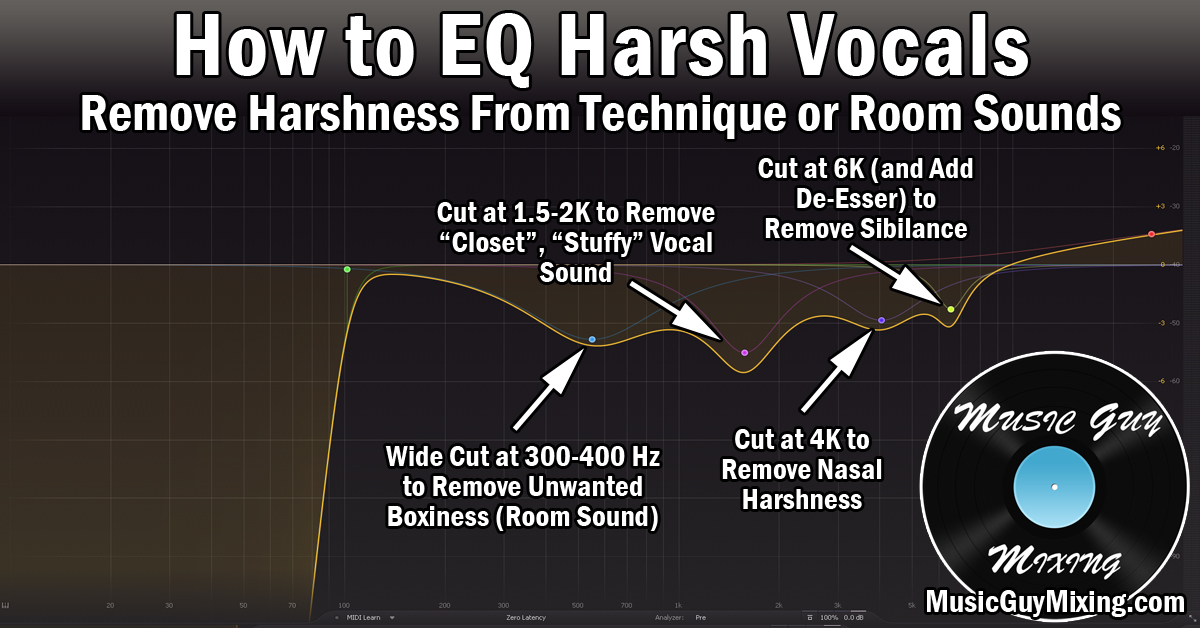
One of the most crucial steps in vocal EQ is identifying the problematic frequencies. Analyze the vocal track and identify the frequencies that make it sound muddy, too bright or harsh. Use frequency analyzer plugins to help you identify the frequencies causing issues in the vocal track.

Using High-pass Filter To Reduce Muddiness

Muddiness is a common problem in vocal recordings, and high-pass filtering is an effective solution to tackle this issue. Set the high-pass filter around 100 Hz, and gradually increase until the muddiness is gone. Be careful not to remove too many low-end frequencies, which can result in a thin-sounding vocal.

Using Low-pass Filter To Control Harshness

If your vocal track sounds harsh or sibilant, you can use a low-pass filter to control the high-end frequencies. Set the low-pass filter around 8 kHz and adjust until the harshness is reduced. Be careful not to cut too much high-end, which can result in a dull vocal sound.

Cutting And Boosting Specific Frequencies

Cutting and boosting specific frequencies can help you achieve a well-balanced vocal sound. Cut the frequencies that are causing issues in the vocal track, and boost the frequencies that need more emphasis. Use a narrow Q setting to avoid affecting surrounding frequencies. In conclusion, by following these tips for Vocal EQ, you can achieve a smooth, balanced and clear vocal sound in your mixes. Remember, it’s essential to approach vocal EQ with a critical ear, patience, and attention to detail to achieve the desired results.

Types Of Vocal Compression

Vocal Eq compression involves adjusting the levels of different frequency ranges in a singer’s voice, enabling the vocal performance to sound more balanced. Eq compression is instrumental to cut through robust mixes while maintaining clarity, preserving the vocals at the mix’s forefront.

Types of Vocal Compression Compression is one of the most used techniques in music production, and it’s essential to understand the different types of vocal compressions available. Depending on the type of compressor, you’ll get different responses and varying degrees of control over the sound. In this section, we’ll discuss the three main types of vocal compressions: Optical Compression, VCA Compression, and FET Compression. Optical Compression Optical compressors use a light-dependent resistor (LDR) to control the gain reduction of the signal. They’re known for their smooth, transparent sound and are popular for gently taming vocal dynamics. Optical compressors are ideal for adding warmth and character to a vocal without altering its tone. They’re easy to use, and many of them feature a single knob that controls the amount of compression applied. VCA Compression Voltage-controlled amplifiers (VCAs) are the backbone of most compressors, and they’re found in digital, analog, and hardware units. VCA compressors are known for their accuracy and fast response times, making them ideal for controlling loud and percussive vocals. They’re also known for their transparent sound, which makes them ideal for subtle compression adjustments. VCA compressors have several controls, including ratio, threshold, attack, release, and makeup gain. FET Compression Field-effect transistor (FET) compressors use a FET to control the gain reduction of the signal. They’re popular for their aggressive, upfront sound, and are ideal for adding punch and character to vocals. FET compressors have a fast attack time, which helps capture the initial transient of a vocal. They’re also known for their warm, vintage character and are often used on rock and pop vocals. FET compressors typically have controls for ratio, threshold, attack, release, and makeup gain. In conclusion, understanding the different types of vocal compressions available is essential for achieving the desired sound. Each type of compressor has its unique characteristics and applications, and choosing the right one will depend on the vocal performance and the desired result. Whether you go for the smooth, transparent sound of an optical compressor, the accuracy of a VCA compressor, or the aggression of an FET compressor, your vocals will benefit greatly from the right type of compression.

Tips For Vocal Compression

Achieving the perfect vocal sound can be a challenge, but using vocal EQ compression can help. Start by setting a low ratio and applying gentle compression, then adjust the attack and release times to smooth out the vocal.

vocal EQ compression to enhance the quality of your recordings. In this post, we’ll focus on some essential tips for vocal compression, including controlling dynamics, avoiding over-compression, and using sidechain compression for optimal vocal clarity.

Using Compression To Control Dynamics

Compression helps in controlling the dynamics of vocals, which is critical for a polished sound. One of the best ways to achieve this is by using a low ratio compression setting. This is because a lower ratio setting offers a gentle compression effect, which leaves the overall dynamic range more intact.

Avoiding Over-compression

When compressing vocals, it’s essential to avoid over-compression. When too much compression is applied, vocals can sound too compressed and lose clarity. As a general rule, keep your compression settings to a maximum of 4:1. You can also use the output gain control to balance the overall sound.

Using Sidechain Compression For Vocal Clarity

sidechain compression. This technique helps to reduce competing frequencies and brings clarity to the vocal. You can do this by routing a copy of the vocal track to the compressor’s sidechain input. From there, set the compressor’s threshold to the competing frequency’s level to achieve optimal clarity. In conclusion, vocal compression is a crucial technique for enhancing the quality of your recordings. By following these tips, you can effectively control the dynamics, avoid over-compression, and use sidechain compression to bring clarity to your vocals.

Vocal Eq Compression

Credit: www.musicguymixing.com

Vocal Eq Compression

Credit: www.youtube.com

Frequently Asked Questions On Vocal Eq Compression

How Do I Compress And Eq Vocals?

To compress and EQ vocals, use a dynamic processor and an equalizer. First, use compression to reduce the dynamic range and even out the volume. Then, use EQ to shape the frequency response and smooth out any harshness or sibilance.

Experiment until you find the right settings for the desired effect.

Should You Eq Vocals Before Compression?

Yes, it is recommended to EQ vocals before compression. This helps to eliminate unwanted frequencies and enhance the desired ones, resulting in a cleaner and more professional sound. EQing after compression can alter the overall balance and affect the dynamic range of the vocals.

What Is The Best Setting For Vocal Compression?

The best setting for vocal compression depends on the recording quality, desired sound, and genre of music. Generally, a ratio of 2:1 to 4:1, attack time of 5-10ms, and release time of 80-100ms work well. Adjust the threshold until the vocal sounds consistent and clear in the mix.

How Much Compression Should I Use On Vocals?

The amount of compression to use on vocals depends on the song and desired effect. Generally, gentle compression is recommended to deal with minor fluctuations in vocal volume. More compression can be used for a “squashed” effect, but be careful not to overdo it and lose the natural dynamic range of the singer’s performance.

It’s important to experiment and find a balance that works for each specific track.

Conclusion

Achieving the perfect vocal sound is a complex art to master, but utilizing the right vocal EQ compression techniques can make all the difference. By using the correct settings and experimenting with different techniques, you can help to enhance the clarity, depth, and overall quality of vocals in your recording.

It’s important to remember that every voice is unique, so it’s essential to tailor your vocal EQ compression to the individual artist to maximize their vocal potential. With dedication and practice, you can unlock the full potential of your vocal tracks.

Categories
Archive

F Major Chord Scale

F Major Chord Scale consists of the notes F, G, A, Bb, C, D, and E. The F Major Chord Scale is a seven-note musical scale that is typically used in pop, rock, and country music. The scale consists of the notes F, G, A, Bb, C, D, and E, and can be used to create chord progressions, melodies, and solos in the key of F Major.

The scale is often used in conjunction with other chords and scales to create a variety of musical textures and tones. As with any musical scale, the F Major Chord Scale can be challenging to master, but with practice, it can add depth and complexity to your music.

Whether you are a beginner or an experienced musician, learning the F Major Chord Scale can help you take your playing to the next level.

What Is F Major Scale?

The F Major Scale is a musical scale that features the F Major chord as its tonic or home note. It is a commonly used scale in classical, jazz, and pop music, with a bright and upbeat sound. The scale consists of the notes F, G, A, Bb, C, D, and E.

F Major Scale is a musical scale that consists of a set of notes arranged in ascending or descending order. It is one of the most popular Major scales and is often used in various genres of music, including classical, rock, pop, and jazz. The key signature of F Major Scale comprises one flat, i.e., B♭.

Notes In F Major Scale

F Major Scale consists of seven notes, namely, F, G, A, B♭, C, D, and E. These notes can be played in ascending or descending order. The table below shows the notes in F Major Scale:

NoteName
FTonic
GSupertonic
AMediant
B♭Subdominant
CDominant
DSubmediant
ELeading Tone

Intervals In F Major Scale

Intervals in F Major Scale are the distances between the notes in the scale measured in semitones or half-steps. The intervals in F Major Scale are listed below:

  • F to G – Major 2nd
  • G to A – Major 2nd
  • A to B♭ – Minor 3rd
  • B♭ to C – Major 2nd
  • C to D – Major 2nd
  • D to E – Major 2nd
  • E to F – Minor 2nd

Thus, the sequence of intervals in F Major Scale is whole, whole, half, whole, whole, whole, half. This sequence of intervals is the same in all Major scales. In conclusion, F Major Scale is an essential scale for any musician to learn. Understanding the notes and intervals in F Major Scale is crucial to playing and composing music in this key.

F Major Chord Scale

Credit: jadebultitude.com

Formation Of F Major Chord

If you’re looking to learn music theory, one of the first things you’ll encounter is chord progressions. Understanding how to create chords is an important step towards playing and composing music. One of the most basic chords you’ll come across is the F Major Chord. In this blog post, we’ll break down the components of this chord and give you an easy-to-follow explanation of how it’s formed.

Triad Chord Structure

Before we dive into the specifics of the F Major Chord, it’s important to understand the basic structure of a triad chord. A triad chord consists of three notes: the root note, the third note, and the fifth note. The root note is the basis for the chord, while the third and fifth notes determine its quality.

There are four kinds of triad chords: major, minor, augmented, and diminished. Major chords have a happy, uplifting sound, while minor chords sound sad or moody. Augmented chords sound tense and unstable, while diminished chords sound tense and unstable to an even greater degree.

F Major Chord Notes

The F Major Chord is a major chord and consists of three notes: F, A, and C. F is the root note, A is the third note, and C is the fifth note. It’s worth noting that all major chords follow the same pattern of notes: the root note, a note four semitones (or half-steps) higher, and a note seven semitones higher.

To play the F Major Chord on a piano, place your thumb on the F note, your middle finger on the A note, and your little finger on the C note. Strumming a guitar in F major involves placing your index finger on the first fret of the B string, middle finger on the second fret of the G string, and ring finger on the third fret of the D string.

Now that you know how to form the F Major Chord, it’s just a matter of practicing until it becomes second nature. With a little effort and dedication, you’ll be playing beautiful music in no time!

Different Ways Of Playing F Major Chord

Mastering the F Major Chord Scale opens up different ways of playing this versatile chord. By mastering different fingerings and positions, musicians can create unique melodic patterns that give a distinct texture to their music.

Playing the F Major chord is essential for novice guitar players, as it is among the most commonly used chords in popular music. As a beginner, it is important to learn how to play the F Major chord efficiently, and there are different ways to achieve this. In this article, we will explore different ways of playing F Major chord, which includes the open F Major chord, barre F Major chord, and F Major chord in different positions.

Open F Major Chord

The open F Major chord is one of the easiest ways to play the F Major chord on the guitar. To play this chord, place your index finger on the first fret of the second string and your middle finger on the second fret of the third string. Then, place your third finger on the third fret of the fourth string. Ensure that your fingers are properly positioned and that each string sounds clearly when strummed. The open F Major chord is ideal for beginners as it does not require much finger stretching, making it easier to transition to other chords.

Barre F Major Chord

The barre F Major chord is a more advanced technique, but it is a valuable skill to master. To play this chord, you must use your index finger to bar all the strings at the first fret while placing your other fingers in the usual position. The barre F Major chord can be tricky for beginners as it requires more finger strength and may cause finger fatigue. With regular practice, your fingers will gradually build strength, and playing barre chords will become easier.

F Major Chord In Different Positions

The F Major chord can also be played in different positions on the guitar, giving it a diverse sound. To play an F Major chord in a higher position, move your fingers up the fretboard, placing your index finger on a higher fret to change the root note of the chord. Experiment with different finger positions to find alternative versions of the F Major chord that suit your playing style.

Practice Tips

Learning to play the F Major chord takes time and practice. Here are some tips to help you master these techniques:

  • Start with the open F Major chord and practice transitioning to other chords
  • Develop finger strength with regular practice sessions
  • Experiment with different finger positions to find the best way to play the F Major chord
  • Practice playing the F Major chord with a metronome to improve your timing

In conclusion, the F Major chord is a staple chord that every beginner guitarist should learn to play. By mastering the different ways of playing F Major chord, you can add variety to your playing style and create a broader range of sounds. With practice, you’ll be able to play the F Major chord smoothly and effortlessly, opening the door to more advanced chords and songs.

F Major Chord Scale

Credit: professionalcomposers.com

F Major Scale Modes

The F Major Key is a popular keys in music, often used in many genres such as pop, rock, classical, and jazz. It is also the key that is the easiest for the guitar. The F Major Scale chords are F, Gm, Am, Bb, C, Dm and Edim. Understanding the modes of F Major Scale is vital for any musician because it allows you to identify the notes you will need to play melodies to accompany chords.

F Ionian Mode

The F Ionian Mode is the major scale made up of the notes F, G, A, Bb, C, D and E. It is the first mode of the F Major Scale, also known as the ‘basic’ or ‘primary’ mode, and is often used in popular music. In fact, you are probably familiar with many popular songs that use the F Ionian Mode.

F Dorian Mode

The F Dorian Mode is the second mode of the F Major Scale and is useful for giving a minor tonality to a song while still being in the major key. The notes in F Dorian Mode are F, G, Ab, Bb, C, D and Eb. Many musicians use the F Dorian mode for improvisation, especially in jazz.

F Mixolydian Mode

The F Mixolydian Mode is the fifth mode of the F Major Scale, which is commonly used in a wide range of musical genres, including blues, rock, and jazz. This mode is great for creating tension and is useful when you want to add a bit of edge to your music. The notes in F Mixolydian Mode are F, G, A, Bb, C, D and Eb.

Understanding the modes of F Major Scale allows a musician to create melodies and harmonies that fit perfectly into any piece of music. As you learn and practice, you will find yourself becoming better at recognizing which modes to use in order to achieve different tonalities and moods in your songs.

Playing F Major Chord Progressions

If you’re looking to add a bit of flavor to your chord progressions, the F Major chord is a great place to start. Not only is it a commonly used chord in many genres of music, but it also has a unique sound that can add depth and complexity to your music. In this post, we’ll explore some common progressions and chord substitutions that use the F Major chord.

Common Progressions With F Major Chord

One of the most common progressions using the F Major chord is the I–IV–V progression. This progression uses the F, B♭, and C chords and is commonly found in pop and rock music. Another popular progression is the ii–V–I progression which uses the G minor, C Major, and F Major chords. This progression provides a smooth and satisfying resolution back to the F Major chord.

If you’re looking for a more unique and complex chord progression, try the I–IV–V–vi progression. This progression uses the F, B♭, C, and D minor chords and can be found in many popular songs.

Chord Substitutions With F Major Chord

The F Major chord can also be substituted for other chords to add variation to your progression. One common substitution is the F Major 7 chord, which replaces the F Major chord and adds a bit of tension to the progression. Another substitution is the F6 chord, which can add a jazzy feel to your music.

If you’re looking for a more dramatic substitution, try replacing the F Major chord with the B♭ Minor chord. This substitution adds a completely different flavor to your music and can create an emotional impact.

Conclusion

By incorporating the F Major chord into your chord progressions and experimenting with substitutions, you can add depth and complexity to your music. Whether you’re a beginner or an experienced musician, the F Major chord is a great tool to have in your musical arsenal.

Tips For Playing F Major Chord

Playing the F Major chord can be challenging, but with the right technique, it can sound beautiful. It’s important to focus on your finger placement, applying enough pressure to the strings, and keeping your fingers curved. Remember to practice regularly to improve your playing skills.

Playing F Major Chord is an essential step for beginners as it is a fundamental chord that is used in various songs and compositions. As a beginner, it is crucial to learn the correct hand positioning, fingerstyle playing, and exercises for F Major Chord to make the learning process more manageable. Additionally, you will need to learn how to switch from F Major Chord to other chords smoothly. Here are some tips for playing F Major Chord that will help you master this essential chord.

Hand Positioning

Proper hand positioning is crucial for producing clear and crisp notes while playing F Major Chord. Ensure that your fingers are curved and that your thumb is centered behind the neck of the guitar. Placing your fingers too close or too far away from the frets can produce muffled or buzzing notes. Shift your hand position slightly if you’re struggling to produce clear notes.

Fingerstyle Playing

Playing F Major Chord with fingerstyle technique can produce a unique sound that is often used in acoustic guitar music. Each finger is assigned to certain strings to produce the melody and rhythm. Place your ring finger on the third fret of the A string, your middle finger on the second fret of the G string, and your index finger on the first fret of the E string. Strum the remaining strings with your thumb.

Exercises For F Major Chord

Practicing exercises that involve F Major Chord will help you improve your finger dexterity and muscle memory. For instance, you can try the “1-2-3-4” exercise where you place your fingers on the frets in ascending order on each string. Similarly, you can practice chord progression exercises that involve switching from F Major Chord to other chords.

How To Switch From F Major Chord To Other Chords Smoothly

Learning to switch from F Major Chord to other chords smoothly can be challenging for beginners. Practice switching to other chords that are commonly used with F Major Chord, such as C Major, G Major, and A Minor. Start by practicing the transition between F Major Chord and these chords slowly and gradually increase your speed. Ensure that you are maintaining proper hand positioning during the transition to produce clear notes. In conclusion, mastering F Major Chord is essential for any beginner who wants to play the guitar. Correct hand positioning, fingerstyle playing, exercises, and smooth transitions to other chords will improve your playing quickly. Practice regularly, and you’ll be playing F Major Chord with ease in no time!

Songs Using F Major Chord

The F Major chord scale has been used in many popular songs across various genres. It creates a bright and lively sound, making it a popular choice for upbeat songs. Some examples of songs that use the F Major chord scale include “Brown Eyed Girl” by Van Morrison and “Sweet Child O’ Mine” by Guns N’ Roses.

Songs using F Major Chord hold a special place in the music world. Many popular songs have been composed using the F Major Chord. In this blog post, we will be exploring the F Major Chord Scale and analyzing some of the most popular songs that utilize this chord.

Top 5 Songs With F Major Chord

Here are the top 5 songs that showcase the F Major Chord:

  1. “Let It Be” by The Beatles: This legendary song features a simple chord progression of F – C – G – Am – F – C –G, making it a perfect song for beginners
  2. “Clocks” by Coldplay: This song makes use of a repetitive chord pattern of F – Am – G – F – Am –G – F –Am
  3. “Someone Like You” by Adele: The song’s chorus section features an emotional F – Dm – Bb – C chord progression
  4. “Dancing In the Dark” by Bruce Springsteen: This song’s famous intro features an F – G – Am – F chord progression
  5. “Sweet Child O’ Mine” by Guns N’ Roses: This classic rock song features a powerful F – C – D – Bb chord progression

Chord Progression Analysis In Popular Songs

A number of popular songs are built around a chord progression that prominently features the F Major Chord. For instance, in the song “Let It Be”, the F Major Chord is repeated multiple times in the verse and chorus sections. This repetitive use of the chord gives the song a sense of stability and a solid backbone. Similarly, “Clocks” makes use of a simple chord progression that moves between F Major, A Minor, and G Major. The use of F Major in this progression provides a contrast to A Minor that brings depth to the song. “Someone Like You” features a beautiful chord progression in its chorus, flitting between F Major, D Minor, B-Flat Major, and C Major. The progression is at its most emotional when it shifts from F Major to D Minor, giving the song just the right amount of melancholy. In conclusion, F Major Chord Scale is a valuable tool for songwriters who want to add depth and emotion to their compositions. The chord scale has found its way into many classic songs and remains a popular choice for both beginners and seasoned musicians.

F Major Chord Scale

Credit: jadebultitude.com

Frequently Asked Questions Of F Major Chord Scale

What Are The Chords For The F Major Scale?

The chords for the F major scale are F major, G minor, A minor, Bb major, C major, D minor, and E diminished.

What Is The Scale Of The F Major?

The F major scale consists of the notes F, G, A, B-flat, C, D, and E. It is a diatonic scale, meaning it contains seven different notes.

What Are The 3 Chords In F Major?

The 3 chords in F major are F major, B flat major, and C major.

What Notes Make Up F Major Chord?

F major chord is made up of three notes: F, A, and C.

Conclusion

To sum up, the F Major chord scale is an essential part of music theory for any aspiring musician. Once you have mastered this chord scale, you can use it to create a wide range of musical compositions. Even if you are not a musician, it is still important to understand the basics of music theory, as it opens up a whole new world of appreciation for the art form.

So, keep practicing and experimenting with the F Major chord scale, and you never know where it might take you. Happy playing!

Categories
Archive

What Is Otacore Music

Otacore music is a subgenre of J-pop characterized by its focus on anime and manga themes. Otacore music is a fusion of pop, rock, and electronic dance music, with lyrics often referencing anime, manga, and video games.

The genre emerged in the early 2000s in Japan and has since gained popularity worldwide. Also, otacore artists often perform at anime conventions and events, and a dedicated fanbase of anime and manga enthusiasts has embraced the genre. Some popular otacore artists include Kyary Pamyu Pamyu, BABYMETAL, and Perfume.

Related reading: Music Theory for Producers: The Complete Guide Hub and Music Business, Distribution and Royalties: The Complete Guide. For background, see Anime music on Wikipedia.

Moreover, with its unique blend of Japanese pop culture and modern music, otacore has become a significant cultural export from Japan.

Otacore Music: An Introduction

In addition, the genre is an emerging music genre that blends traditional Japanese culture with electronic dance music. It originated from the anime and video game subcultures and has gained popularity in recent years, especially among the younger generations.

Otacore Music: Defining Otacore

Furthermore, otacore is a genre of music that originated from Japan in the early 2000s and is a fusion of electronic dance music and anime culture. In this genre, anime soundtracks and video game music inspire the music. The term “Otacore” comes from “Otaku,” which refers to a person with intense interests in anime and Japanese culture, and “hardcore,” which refers to the high-energy and fast-paced nature of the music.

Origins Of Otacore

Additionally, you can trace the origins of Otacore back to the underground club scenes of Tokyo in the early 2000s. It gained popularity due to its energetic beats and high-pitched sounds, which draw on anime and video game music. As the genre grew in popularity, it began to merge with other genres such as J-Pop and electronic dance music. Today, the genre is widely popular among fans of anime, video games, and electronic dance music. Many popular DJs and music producers have started including Otacore tracks in their sets, making it more mainstream.

Despite its niche origins, Otacore has managed to find its way into the mainstream music scene and shows no signs of slowing down. In conclusion, Otacore is a unique and exciting genre of music that combines elements of anime and video game culture with high-energy beats and electronic dance music. Also, its origins in the underground club scenes of Tokyo have led to it becoming a popular genre worldwide, and its popularity continues to grow with each passing day.

Characteristics Of Otacore Music

The genre originated in Japan and features upbeat electronic beats, heavy guitar riffs, and high-pitched vocals. Moreover, the genre typically features themes of anime, manga, and video games.

The genre is a genre that has been gaining popularity in recent years. It refers to music that Japanese pop culture inspires, specifically anime, manga, and video games. The genre has electronic and dance elements and overflows with positivity and energy. In this post, we will discuss the characteristics of the genre, focusing on its electronic and dance elements and Japanese pop culture influences.

Electronic And Dance Elements

The genre is an amalgamation of various genres, including electronic and dance. Fast beats, high-energy rhythms, and upbeat melodies define the music. The use of synthesizers, drum machines, and sound effects is another hallmark of the genre. The resulting sounds are playful, lively, and catchy, which makes the music ideal for dancing and partying.

Japanese Pop Culture Influences

Japanese pop culture, particularly anime, manga, and video games, heavily shapes the genre. The lyrics often reference characters and themes from popular anime series, and the music videos feature anime-style visual motifs. This infusion of pop-culture references appeals to fans of anime, manga, and gaming, making it a vibrant and distinct genre. The genre has generated a significant following in Japan, and the fandom continues to grow internationally.

Conclusion

The genre offers an exciting blend of electronica, dance, and Japanese pop-culture influences. The genre is a testament to the creativity and energy of otaku culture, creating a unique and catchy musical style that many listeners adore. With its high-energy rhythms and upbeat melodies, the genre is perfect for dance parties, anime conventions, or any occasion that calls for some fun and lively music!

Otacore Versus Other Music Genres

The genre, also known as anime music, is a genre that originated from Japan and focuses on anime soundtracks. Unlike other genres, it incorporates the use of J-pop, rock, and classical music. Otacore fans tend to have a strong attachment to specific anime shows and may feel nostalgia when listening to their soundtracks.

Otacore is a music genre that originated from Japan and is gaining popularity globally. It is a unique type of music that combines electronic dance music (EDM) with anime and Japanese pop culture. The word “Ota” means “geek” or “nerd” in the Japanese language, and therefore Otacore music caters to the tastes of all those who identify as anime geeks, gamers, or otaku. When it comes to music, different genres cater to different tastes and preferences of individuals. Similarly, Otacore has its unique characteristics that distinguish it from other genres, such as J-Pop and anime soundtracks.

Otacore Vs J-pop

J-Pop, or Japanese Pop, is a popular music genre that originated in Japan and draws heavily on Western music. In contrast, the genre has a more electronic and dance music vibe to it, heavily influenced by anime and gaming culture. The genre has a faster tempo, beats, and often features catchy anime-inspired lyrics. Fans of the genre are often those who enjoy dancing and raving at anime or gaming conventions.

Otacore Vs Anime Soundtracks

Anime soundtracks are the music used in anime shows, and while they may share similarities with the genre, they are quite different. Composers create anime soundtracks specifically for anime shows and design them to elicit specific emotions and reactions in the viewer. The genre, on the other hand, is stand-alone music that is not connected to any particular anime or show. The genre also often includes vocals, while anime soundtracks may not have lyrics, or if they do, they are often thematic and relevant to the anime’s story. In conclusion, Otacore is a unique music genre that combines anime culture with electronic dance music. While it shares similarities with J-pop and anime soundtracks, Otacore has its unique characteristics that distinguish it from these other genres. For those who enjoy anime, gaming, and dancing, the genre is definitely worth a listen.

What Is Otacore Music

Credit: twitter.com

Popular Otacore Artists And Songs

The genre, also known as anime music or Japanese anime music, is becoming increasingly popular worldwide. Some of the popular Otacore artists and songs include Yui, LiSA, and Radwimps, known for their catchy and energetic tunes. Whether you’re a fan of anime or simply enjoy upbeat and passionate music, Otacore is definitely worth exploring.

The genre is a subgenre of Japanese pop music, which features anime and otaku culture themes. This music genre emerged in the 2000s and has gained a considerable following around the world. Otacore fans love anime, manga, and video games, and the music they listen to reflects this passion. In this article, we will explore popular Otacore artists and songs that are worth adding to your playlist.

Top Otacore Artists

If you are new to the genre, you might be wondering which artists dominate the genre. Here are some of the top Otacore artists that are household names among anime fans:

ArtistDescription
LiSAKnown for her high-pitched voice and catchy anime theme songs, LiSA is one of the most popular Otacore artists today. Her hit songs include “Crossing Field” from Sword Art Online and “Gurenge” from Demon Slayer.
May’nMay’n rose to fame after singing the theme song for the anime series Macross Frontier. Since then, she has become a regular performer at anime conventions around Japan and overseas.
Konomi SuzukiKonomi Suzuki is a young and talented singer who has lent her voice to many popular anime series, including No Game No Life and Re:Zero. She has won several awards for her work, including the Best New Artist Award at the 7th Seiyu Awards.

Otacore Music: Top Otacore Songs

The genre is all about catchy, upbeat tunes that get you in the mood for anime and gaming. Here are some of the top Otacore songs that you should definitely check out:

  • “Cruel Angel’s Thesis” by Yoko Takahashi: The opening theme song for the anime series Neon Genesis Evangelion is a classic Otacore anthem that never gets old.
  • “JIBUN WOO” by L’Arc-en-Ciel: This opening theme song for the anime Code Geass: Lelouch of the Rebellion is a crowd-pleaser that gets everyone pumped up.
  • “This Game” by Konomi Suzuki: This upbeat song was the opening theme for the first season of the anime series No Game No Life, and it perfectly captures the energy and excitement of the show.

Conclusion: the genre is a fun and exciting subgenre of Japanese pop music that is perfect for anime and gaming enthusiasts. With its catchy tunes and high-energy beats, the genre is sure to get you in the mood for your next binge-watching session. We hope this article has given you a taste of some of the top Otacore artists and songs out there, and that you have discovered some new favorites to add to your playlist.

How Otacore Music Is Produced And Distributed

The genre is a genre that combines traditional Japanese sounds with modern electronic beats. It’s produced using digital music software like FL Studio or Ableton and relies on a mix of synthesized and recorded sounds. Distribution is typically done through online platforms like YouTube or Soundcloud.

The genre is a type of Japanese pop music that is heavily influenced by anime and manga culture. It is a sub-genre of J-pop and typically features upbeat, catchy melodies, and high-pitched vocals. While the genre originated in Japan, it has gained popularity worldwide, particularly in countries where anime and manga have a large following.

Music Production Process

The production process for the genre is similar to that of traditional J-pop music. The music is primarily produced in Japan, where many industry professionals work to create the unique sound. The music is typically composed by a team of professionals, including songwriters, producers, and arrangers. The songs are then recorded by a singer, often a popular female idol, who provides the vocals for the final track.

Distribution And Consumption Patterns

The genre is distributed mostly online through popular platforms like YouTube, Spotify and Soundcloud. Fans consume the music by streaming or downloading it to their devices. While the genre originated in Japan, the genre has gained significant popularity worldwide. Fans outside of Japan can stream and download the music online, attend concerts and purchase merchandise from online retailers. Fans of the genre often organize themselves into dedicated communities, participate in cosplay and generally take part in various lifestyle activities closely related to the genre.

Conclusion

The genre has not only gained popularity in Japan but has influenced and impacted music globally. The genre production and consumption are described above while outlining the process of how Otacore music is produced and distributed. As the popularity of the genre continues to grow worldwide, so too does the number of Otacore music fans and events that celebrate the music.

What Is Otacore Music

Credit: www.reddit.com

Otacore Music And Fandom Culture

The genre is a genre that originated within the fandom culture of anime and manga fans. It combines electronic dance beats with Japanese pop culture references and anime-inspired lyrics, creating a niche sound that appeals to a specific community of fans.

When discussing Otacore music, it’s hard not to mention the deeply ingrained fandom culture that surrounds it. The genre is a term used to describe anime-related music, and the fans who enjoy it are often called “otaku,” which refers to an individual who is deeply passionate about anime and Japanese culture. The influence of the genre on fandom culture is immense, and it has played a significant role in shaping the communities that have formed around it. In this post, we’ll explore the role of music in Otaku Culture, as well as the fandom communities around Otacore.

Role Of Music In Otaku Culture

Music has always been an integral part of Otaku culture, and the genre is no exception. It’s not uncommon for anime series to have catchy theme songs that are just as popular as the show itself. These songs often capture the mood and atmosphere of the anime and are carefully crafted to resonate with the viewer. As a result, Otaku culture has incorporated Otacore music into its daily life. Songs from anime series are often listened to on a regular basis, and many fans enjoy covering them on various social media platforms.

Fandom Communities Around Otacore

With the rise of social media, fandoms have become more accessible than ever before. The genre fans have formed their own online communities, where they can share their passion for the music they love. These communities often host events, such as music festivals and concerts, where fans can come together and enjoy the music they adore. Additionally, many Otacore artists communicate with their fans through social media, creating a closer connection between artist and fan. These communities have also been instrumental in popularizing Otacore music outside of Japan, with fans from all over the world participating in the fandom.

In conclusion, the genre has played a significant role in Otaku culture, both in Japan and around the world. The catchiness of its songs, combined with the deep passion its fans have for the music, has created a unique fandom culture that is unlike any other. Its influence on anime and Japanese culture cannot be denied, and it’s exciting to see how it will continue to evolve and shape the communities that surround it.

The Future Of Otacore Music

The genre, also known as animecore or anisong, is a genre of music that is gaining popularity globally, particularly among youths who are fans of Japanese animation and gaming. Its future looks promising as more artists from around the world are creating their own otacore music, and it continues to evolve and incorporate different styles and sounds.

Otacore music is gaining popularity amongst music enthusiasts, especially among the millennials and Gen Z population. This genre of music started in Japan and has since then gained massive following and acceptance worldwide. As the world becomes more digitalized and globalized, the future of Otacore music seems to be bright and promising. This article discusses the future of Otacore music, innovations, and evolution of Otacore, and global recognition and mainstream acceptance in detail.

Innovations And Evolution Of Otacore

Otacore music is evolving with technological advancements and has expanded into different sub-genres like Otajazz and Otapop. Otacore musicians are experimenting with different music styles and incorporating them into their compositions. Western music collaborations are also becoming increasingly popular, which is helping Otacore gain a broader audience. With artificial intelligence and virtual reality technology enhancing the music industry’s capabilities, Otacore music is expected to produce new and exciting sounds globally.

Global Recognition And Mainstream Acceptance

Otacore has come a long way since its inception in the 1980s, and today it has a significant and growing fan base worldwide. This genre is recognized as a genuine art form that has a unique musical style, storyline, and a subculture that appeal to younger audiences. Otacore music videos have broken barriers and stereotypes, showcasing diverse characters and cultures. Mainstream music industries have recognized the potential of this genre and are incorporating Otacore elements into their music compositions. With concerts and events like Anime Expo, Otakon, and Comiket, Otacore is here to stay connected with different cultures globally.

In conclusion, Otacore music is gaining momentum and recognition worldwide. Innovations in technology and sub-genres are continuously expanding its horizon, making it a genre to look forward to. With a growing fan base and mainstream acceptance, Otacore is poised to play a more significant role in the music industry globally.

What Is Otacore Music

Credit: www.kolibrimusic.com

2026 Update: Where the Otacore Label Came From

“Otacore” was one of the genre names in Spotify’s genre system, which was mapped publicly on Glenn McDonald’s site Every Noise at Once. McDonald was laid off by Spotify on December 4, 2023, and the genre map is now a static snapshot of Spotify data up to November 19, 2023. In January 2025 he noted that Spotify’s API had switched from that human-curated genre system to machine-assigned tags. So the otacore label still exists on Every Noise at Once, but it’s no longer actively updated from Spotify.

Frequently Asked Questions Of What Is Otacore Music

What Are Otacore Songs?

Otacore songs are tracks grouped under Spotify’s “otacore” genre label, a listener-based tag rather than a formal musical style. The label collects music popular with anime and otaku fans, such as anime openings and endings, J-pop, J-rock and Vocaloid songs.

What Does Otacore Mean On Spotify?

On Spotify, otacore was one of the genre labels in its genre system, mapped publicly on Every Noise at Once. It describes what anime and otaku fans listen to, rather than one sound, so it spans pop, rock and electronic tracks.

What Is Otaku Core?

“Otaku core” is another way of writing otacore: the Spotify listener label for music popular with otaku, meaning devoted fans of anime, manga and games.

What Is Otacore Music?

Otacore music is a sub-genre of Japanese music that combines elements of anime, video game music, and other forms of pop music. It often features high-energy beats, electronic synthesizers, and bright, catchy melodies.

Is otacore a real music genre?

Otacore is a listener-driven label rather than a formal genre. It comes from Spotify’s genre system, as mapped on Every Noise at Once, and groups music popular with anime and otaku fans: anime openings and endings, J-pop, Vocaloid and similar sounds.

What does otacore mean?

It combines “otaku” (a devoted fan of anime, manga or games) with “-core”, the suffix often used for music scenes and aesthetics. In short: music for otaku.

Conclusion

Otacore music is a genre that has been growing in popularity among anime and video game fans. It features electronic beats and Japanese pop culture elements that create a unique blend of music. As people become more globally connected, it’s no surprise that music genres are also becoming increasingly influenced by cultural diversity.

Otacore music is just one example of how music is evolving to suit the tastes of a new generation of musical aficionados. So turn up the volume and enter a new world of music with Otacore.

Categories
Archive

Mixing Or Non Musician Jobs

Mixing jobs don’t require a musical background, while non-musician jobs do. Mixing jobs can include audio, video, and film editing.

Also, non-musician jobs can include management, promotion, and sales within the music industry. Many jobs are available within the music industry, and not all of them require a musical background. While some roles like mixing and audio engineering can be performed without musical expertise, other jobs within the industry do require a deeper understanding of music and its nuances.

Related reading: Jobs For Musicians: Unlocking Lucrative Gig Opportunities and Music Related Musicians Jobs : Unlock Lucrative Opportunities. For background, see Audio engineer on Wikipedia.

Moreover, the mixing industry requires attention to detail typically associated with a technical background. A mixer may edit audio, video, or film without producing the music themselves. On the other hand, musician roles may include session work and live performance, which requires an extensive knowledge of music and musical instruments. Non-musician jobs include managers, promoters, and salespersons who work behind the scenes to help musicians succeed.

Mixing Or Non Musician Jobs

Credit: majormixing.com

Non-musician Jobs: Top Mixing Jobs

In addition, whether you’re a musician or a non-musician, there are plenty of opportunities to work as a mixer. Mixers are responsible for taking audio tracks and blending them together to create a polished, cohesive sound. In this article, we’ll explore some of the top mixing jobs available, including audio mixing, live sound engineering, and mastering engineering.

Audio Mixer

Furthermore, as an audio mixer, you’ll be responsible for combining individual audio tracks into a final stereo or surround sound mix. This often involves adjusting levels, applying EQ and compression, adding effects, and balancing the overall sound. Audio mixers work in a variety of settings, including recording studios, film and television sound stages, and post-production facilities.

Live Sound Engineer

Live sound engineers are responsible for ensuring that the sound quality at live events, such as concerts and festivals, is of the highest possible standard. This involves setting up and operating sound equipment, tuning the audio system to the venue, and mixing sound in real-time during the performance. Additionally, live sound engineers must have a keen ear for detail and be able to work well under pressure.

Mastering Engineer

Also, mastering engineers are responsible for taking the final mix of a project and preparing it for distribution. This involves adding finishing touches to the audio, such as EQ, compression, and limiting, and ensuring that the volume levels are consistent across all tracks. Mastering engineers often work in specialized mastering studios and must have a deep understanding of audio technology and equipment.

Overall, mixing jobs are an essential part of the music and entertainment industry. Moreover, whether you’re just starting out or you’re a seasoned pro, there are plenty of opportunities available to work as an audio mixer, live sound engineer, or mastering engineer.

Top Non Musician Jobs

In addition, many people think that working in the music industry means having to be a musician. However, there are plenty of non-musician jobs that allow you to be a part of the industry without having to know how to play an instrument or sing. Here are the top non-musician jobs to consider:

Non-musician Jobs: Music Journalist

Furthermore, if you have a passion for writing and love music, becoming a music journalist may be the perfect job for you. As a music journalist, you would be responsible for writing album reviews, conducting interviews with musicians, and covering music events such as concerts and festivals.

In addition, you may also be responsible for writing opinion pieces and think pieces on the industry itself. Additionally, a great music journalist has excellent knowledge of the music industry, an ear for good music, and the ability to write compelling articles that engage readers.

Music Therapist

Also, if you have a passion for helping others and love music, becoming a music therapist may be the ideal career for you. Music therapists use music to help patients with various physical and mental health problems. They work with patients to create playlists, write songs, and play musical instruments to help them cope with stress, anxiety, and other health issues.

Moreover, it’s an incredibly rewarding job that can make a difference in people’s lives. To become a music therapist, you would need a degree in music therapy and certification from the Certification Board for Music Therapists.

Music Publicist

If you have excellent communication and marketing skills, becoming a music publicist may be the perfect career for you. Music publicists are responsible for promoting musicians and their music to the public. They work on marketing campaigns, secure media coverage for their clients, and organize interviews and appearances on radio and television.

A successful music publicist has excellent writing skills, knows how to pitch stories to the media, and has vast knowledge of the music industry. To become a music publicist, you would need a degree in public relations, marketing, or a related field.

There are many other non-musician jobs in the music industry, such as music teacher, music retailer, and music software developer. These jobs require different skills and qualifications, but they all offer exciting opportunities to work in the music industry and be a part of the magic that makes music so special.

How To Build A Career In Mixing And Non Musician Jobs

Building a career in mixing or non-musician jobs can be challenging but rewarding. By developing related skills such as audio editing, sound design, and technical support, one can pursue opportunities in film, television, gaming, and live events. Non-musician Jobs: Networking and building a portfolio are also essential to showcase one’s expertise and secure job opportunities in this industry.

Apprenticeships And Internships

One of the best ways to start a career in mixing or other non-musician jobs is through an apprenticeship or internship. These opportunities not only offer hands-on experience, but they also provide a foot-in-the-door to the industry. Apprenticeships and internships allow you to work closely with established professionals, learn new techniques, and develop essential skills.

Networking

Networking is a key component to building a career in any industry, mixing and non-musician jobs included. Make connections through industry events, social media, and online forums. Attend concerts and shows, and meet other professionals in your field. Don’t be afraid to reach out to people and ask for advice or mentorship. You never know when an opportunity may arise from a simple conversation.

Education

While it’s not always required, having an education in audio engineering, sound design, or related fields is a great way to build your skills and knowledge. Consider enrolling in a program at a school or university, or taking online courses in your spare time. Keep up with the latest technology and techniques in your field, and always be willing to learn and improve. Overall, building a career in mixing or non-musician jobs requires a combination of education, experience, and networking. Pursuing apprenticeships and internships, networking with industry professionals, and staying up to date on the latest technology and techniques are all important steps towards success in these fields.

Mixing Or Non Musician Jobs

Credit: majormixing.com

Challenges In Mixing And Non Musician Jobs

Mixing and non-musician jobs can pose unique challenges, as individuals may struggle to balance their technical skills with creative demands. However, with training and a keen eye for detail, anyone can excel in these fields and produce high-quality work.

As with any career path, there are certain challenges that come with working in mixing or non-musician jobs. However, these challenges can often be unique to the music industry and require a different level of skill and dedication to overcome.

Long Hours

Mixing and non-musician jobs in the music industry often require long hours. This can be due to the creative process involved in producing music, as well as the need to work around artists’ busy schedules. Many mixing engineers may find themselves spending long hours in the studio every day, working to perfect a song or mix. Non-musician jobs, such as those in marketing or event management, may also require long hours in order to coordinate events or promotions. This can lead to high stress levels and burnout, requiring careful time management and self-care.

Competition

The music industry is highly competitive, with many talented individuals vying for limited opportunities. This competition can make it difficult for mixing engineers and non-musician professionals to stand out and build a successful career. It requires dedication, hard work, and the ability to network and make connections within the industry. Additionally, the digital age has made it easier for amateur musicians and producers to enter the market, creating even more competition for professional mixing engineers and non-musician professionals.

Constant Learning Curve

The music industry is constantly evolving, with new technologies and trends emerging regularly. As a result, mixing engineers and non-musician professionals must be willing to adapt and continue learning throughout their career. This can involve staying up-to-date with the latest software and equipment, attending industry events and conferences, and collaborating with other professionals to learn new techniques and approaches. It requires a passion for the craft and a willingness to put in the time and effort needed to succeed. In conclusion, mixing and non-musician jobs in the music industry can be rewarding, but they also come with unique challenges that must be overcome. By managing time effectively, building a strong network, staying competitive, and continuing to learn and grow, professionals in these fields can succeed and thrive in the music industry.

Mixing Or Non Musician Jobs

Credit: www.linkedin.com

Frequently Asked Questions On Mixing Or Non Musician Jobs

How To Work In The Music Industry Without Being A Musician?

There are several non-musical roles in the music industry that you can work in, such as management, marketing, promotions, public relations, A&R, and production. You can also consider working for music streaming services, booking agencies, record labels, venues, and event companies.

Building a network and gaining experience through internships or entry-level positions can help you break into the industry.

What Career Is Making Beats?

A beat maker creates instrumental music tracks or beats. This career involves the use of digital audio workstations, synthesizers, samplers, and drum machines to create original music. Beat makers often work independently or collaborate with artists in the music industry to produce catchy tunes, popular songs, and albums.

What Is The Highest Paying Job In Music?

The highest paying job in music is typically that of a music producer or artist manager. These professionals are instrumental in the success of musical acts and can earn millions in fees and commissions for their work. Other high-paying music careers include concert promoter, talent agent and music director.

How Do You Become A Music Mixer?

To become a music mixer, you need to have a passion for music, an ear for sound, knowledge of audio equipment, and experience in working with digital audio workstations. You can pursue formal education in audio engineering or start as an intern in a recording studio.

Practice and experimentation are key to mastering mixing techniques. Building a portfolio of work and networking with industry professionals can also help you advance your career as a music mixer.

Conclusion

A career in mixing or non-musician jobs can be fulfilling. It takes passion, dedication, and skill to excel in these fields. The key is to stay abreast of industry trends, continuously improve your craft, and seek opportunities for growth. By doing this, you can pave the way towards success and create a meaningful career for yourself.

Remember, with the right mindset and approach, any job can lead to a satisfying and rewarding journey.

Categories
Archive

Rules For Crushing Spotify

To have success on Spotify, focus on curating quality playlists, engaging with your audience, consistently releasing new content, and promoting your music through various channels. In today’s digital age, music streaming platforms have become the backbone of the music industry.

Also, among these platforms, Spotify is one of the most prominent and widely used platforms by music artists and listeners alike. However, with millions of songs uploaded on the platform and countless artists vying for attention, it can be challenging to stand out and gain a loyal audience.

Related reading: Being a Spotify Artist in Today’s Digital World and Spotify Payout per Stream. For background, see artists.spotify.com on Wikipedia.

To make an impact on Spotify, it is crucial to follow some guidelines – curate quality playlists, interact with fans, regularly release new music, and promote your work through different channels. We’ll dive into each of these crucial elements that can help you crush it on Spotify.

Spotify Playlists: Create Killer Playlists

In addition, learn the rules for crushing Spotify by creating killer playlists. Follow these six guidelines for your playlist descriptions to stand out and attract more listeners. Optimize your titles and descriptions to be SEO friendly, unique, and easy to understand.

Furthermore, as a music enthusiast, you may be familiar with the popularity of Spotify. With over 356 million active users, Spotify is the go-to platform for streaming music. With that being said, it is important to stand out from the competition, and creating killer playlists can help you achieve that goal. Here are some essential rules for crushing Spotify.

Research Your Audience

Additionally, to create a fantastic playlist, you must first understand your audience. Analysing their listening patterns and musical preferences can assist you in selecting the appropriate songs to include in your playlist. Keep in mind that the majority of Spotify users listen to music while working out and traveling, so you should tailor the playlist to their specific needs. Utilize Spotify’s analytics tools to track listener behavior and engagement, allowing you to create a more targeted and engaging playlist.

Pick The Perfect Theme

Also, the theme you choose for your playlist may be based on a specific genre, a mood, or a certain era. It’s important to stick to a coherent theme that flows smoothly, whether it’s a party playlist or a relaxing acoustic playlist. To make your playlist stand out in the crowded music scene, strive to be unique. Pick songs that aren’t played regularly on Spotify, and stay away from popular hits unless they truly fit your playlist’s theme. This will keep your playlist fresh, unique, and exciting, leading to more engagement from your audience.

Spotify Playlists: Utilize Collaborative Playlists

Moreover, collaborative playlists are an excellent way to engage with your audience on Spotify. With a collaborative playlist, your audience can contribute to the playlist by adding their favorite tracks. This encourages audience participation, and it can also notify their followers when they add a new song, resulting in more exposure for your playlist. Collaborative playlists also provide valuable insights into your audience’s preferences, allowing you to create more relevant playlists in the future. In conclusion, creating killer playlists is all about understanding your audience, selecting a relevant and coherent theme, and utilizing Spotify’s collaborative playlists. You will be crushing Spotify and captivating music lovers in no time with these essential tips.

Spotify playlists – Rules For Crushing Spotify

Credit: www.reddit.com

Experiment With Thumbnails

In addition, experimenting with different thumbnails is an effective way to improve your Spotify presence and attract more listeners. By testing different designs, colors, and images, you can find the optimal thumbnail that reflects your brand and resonates with your target audience.

Furthermore, implement this tactic to take your Spotify game to the next level.

Additionally, are you looking to increase your streams and subscribers on Spotify? One effective strategy is experimenting with thumbnails. The thumbnail is the first visual representation of your music that listeners will see, so it’s essential to get it right. In this section, we’ll explore two crucial factors to consider when creating thumbnails: choosing high-quality images and testing different designs.

Choose High-quality Images

Also, your thumbnail is the first element of your music that listeners will see. Therefore, it’s essential to choose high-quality images that are consistent with your brand. You can select a photo that represents the essence of your music or create a graphical design that conveys your message. To create a high-quality image, here are a few tips to keep in mind:

Tips
Use high-resolution images to maintain clarity even when viewed in small sizes.
Consider using simple images with bright colors and minimal text so that it grabs the listener’s attention quickly.
Ensure that the image is consistent with your brand’s style and message.

Spotify Playlists: Test Different Designs

Moreover, design is crucial for your thumbnail to stand out and capture the listener’s interest. Therefore, it is essential to test different designs and see what works best. You can try varying your font size, font style, and color schemes. Here are some tips to help you test different designs:

  1. In addition, experiment with different fonts and colors to see what stands out the most.
  2. Furthermore, create variations of your thumbnail and test each design to find out what resonates with the listeners.
  3. Additionally, use simple designs that easily convey the intended message to the listener.

In conclusion, creating an effective thumbnail is essential for increasing your streams and subscribers on Spotify. By choosing high-quality images and testing different designs, your music can also stand out in a listener’s feed. Finally, remember to keep in mind the essence of your brand and the primary message you want your listeners to see.

Promote Your Playlists

Also, to succeed on Spotify, always keep in mind the rules to crush the competition. Avoid overused words and keep sentences brief to maintain reader interest. Your content should be unique, easy to read, in the active voice and plagiarism-free. Remember: no conclusion paragraph and strive to pass AI writing detection.

Moreover, as the world’s largest music streaming platform, Spotify currently has over 350 million active users, offering exposure to both established and emerging artists. Promoting your playlists on this platform is key to crushing your Spotify growth strategy. This article explores three effective ways to promote your playlists: leveraging social media, collaborating with influencers, and using paid promotion.

Leverage Social Media

Social media is a powerful tool for promoting your Spotify playlists and growing your following. In addition, it provides a direct and cost-effective way of reaching a larger audience. Promote your playlist by sharing it on your social media accounts like Facebook, Twitter, Instagram, and others. Share it with your followers, influencers within your niche, and relevant communities. You can also use paid promotion on social media platforms to reach a larger audience that will help build your followers.

Spotify Playlists: Collaborate With Influencers

Collaborating with influencers is an effective way to promote your Spotify playlist. Find influencers in your niche and collaborate with them to promote your playlist on their social media channels or blogs. This approach will help your playlist reach a larger and more engaged audience that will help grow your following and improve engagement with your content. Collaborating with influencers is a surefire way to attract many new followers and increase your overall reach on Spotify.

Use Paid Promotion

Paid promotion is an effective way to get your playlist in front of a larger audience and gain more followers. Several advertising options are available on Spotify, either in the form of sponsored playlists or audio and visual ads. By targeting users who share similar interests, you introduce your playlist to a large group of people who are most likely to enjoy it. The platform also offers advanced targeting options, which enable you to reach a more specific and engaged audience. In conclusion, promoting your playlists on Spotify should be a key strategy for crushing it on the platform. By leveraging social media, collaborating with influencers, and using paid promotion, you can effectively grow your following and increase your engagement metrics.

Engage With Your Listeners

To increase engagement with your listeners on Spotify, it’s crucial to provide fresh and exciting content regularly. The key to crushing it on the platform is to avoid overused phrases, keep sentences brief, and write in an active voice.

Spotify Playlists: Respond To Comments

Engaging with your listeners is not just about creating great content for them. It is about creating a relationship with them, fostering trust and respect. When you respond to comments on your Spotify profile or playlist, you show your listeners that you value their opinion and feedback. This feedback loop helps increase your engagement rate, and ultimately, your followers. The goal is to maintain a two-way conversation with your audience to build an engaged community. So, make sure you reply to comments promptly, thank your followers, and address any concerns or questions they have. It also helps to ask open-ended questions to encourage more conversations with your listeners.

Create Personalized Recommendations

One of the best ways to engage with your followers on Spotify is to personalize your recommendations. The algorithm is sophisticated enough to help you get to know your listeners – their favorite genres, artists or songs. You can use this knowledge to create Spotify playlists that would appeal to them. For example, you can create mood-based playlists for the listeners or introduce them to new artists by including their songs on your playlists. These approaches help keep your listeners engaged and coming back for more.

Additionally, you can use Spotify analytics like the “Listener Feedback report” to learn what your followers listen to or skip. This information helps you fine-tune your content and recommendations according to their preferences. In conclusion, engaging with your listeners is crucial to crushing Spotify. Responding to comments and creating personalized recommendations can help you amplify your presence on the platform and boost your engagement rate. So, start building relationships with your listeners, one conversation, and one recommendation at a time.

Optimize Your Metadata

Optimizing your metadata is crucial when it comes to succeeding on Spotify. Follow these 6 rules, including keeping sentences brief, using a variety of phrases, and avoiding overused words, to crush it on the platform.

Optimize Your Metadata: Choose Relevant Titles and Descriptions, Include Popular Keywords Optimizing your metadata is crucial if you want your music to appear on Spotify’s radar and get maximum exposure. Metadata is the additional information about your music tracks, including the title, artist name, album, and description. By optimizing this metadata, you can increase your chances of getting discovered on Spotify and gain more streams and followers. Choose Relevant Titles and Descriptions The first step in optimizing your metadata is to choose relevant titles and descriptions.

Your title should always be related to the content of your music and should be short and catchy. Spotify restricts the title to 80 characters, so make sure you choose a title that’s concise yet descriptive. Similarly, your description should also be concise and descriptive while highlighting the unique features of your music. Use simple language and avoid unnecessary words so that your description is easy to read and understand. Include Popular Keywords The next step in optimizing your metadata is to include popular keywords. These are words or phrases that people frequently use to search for music on Spotify.

Spotify Playlists: Tips

By including these keywords in your titles and descriptions, you can increase your chances of being discovered by potential listeners. You can use online tools or Spotify’s search bar to find popular keywords related to your music genre. For example, if you are a hip-hop artist, you can use keywords like “rap,” “trap,” “hip-hop,” “beats,” etc. in your metadata. Properly optimizing your metadata is essential for improving the visibility and discoverability of your music on Spotify. By following these simple yet effective tips, you can increase your chances of crushing it on Spotify.

So, make sure you choose relevant titles and descriptions while including popular keywords to get the most out of your Spotify presence.

Spotify Playlists: Utilize Premium Features

Utilizing Premium Features on Spotify is essential in making the most of your music. It includes releasing exclusive content, running ads to reach new audiences, and more. Let’s explore the different ways you can make use of these features and take your music to the next level.

Release Exclusive Content

By releasing exclusive content on Spotify, you can offer something unique and special to your fans. This can include live recordings, acoustic versions of your songs, behind-the-scenes footage, and so on. These exclusive releases can also help to drive engagement and increase your listenership, as fans are more likely to share and promote content that is not available anywhere else.

Here are some steps to follow when releasing exclusive content:

  • Identify the type of content you want to release exclusively.
  • Set a release date and time that is appropriate for your audience.
  • Create buzz around the exclusive release through social media and other marketing channels.
  • Monitor the response to your exclusive release and adjust your strategy as necessary.

Run Ads To Reach New Audiences

Running ads on Spotify is an excellent way to reach new audiences and promote your music to potential fans. Spotify offers various ad formats, including audio and video ads, that can help you target specific demographics, locations, and interests. You can also track your ad performance and make adjustments as needed to improve your ROI.

Here are some tips to maximize your ad performance:

  1. Set a clear objective for your ad campaign and create a strong call-to-action.
  2. Create high-quality, attention-grabbing content for your ads.
  3. Use targeting options to advertise to the audience most likely to engage with your music.
  4. Track your ad performance and make adjustments as needed to optimize for your goals.

By utilizing Premium Features on Spotify, you can attract and engage new listeners, expand your reach, and ultimately take your music career to the next level. With a little creativity and strategic planning, you can make the most of these features and crush it on Spotify.

Spotify Playlists: Stay Consistent

Consistency is key when it comes to making it big on Spotify. You can’t just release one amazing song and expect to have a million followers overnight. You need to keep your audience engaged, and the best way to do that is to stay consistent in your approach.

Stick To A Schedule

When it comes to releasing new music on Spotify, it’s important to have a consistent schedule. Whether you decide to release new songs every two weeks or once a month, make sure you stick to your schedule. This will help your audience get excited about your new content and keep them coming back for more.

Maintain Your Branding

One of the most important aspects of staying consistent on Spotify is maintaining your branding. This means everything from your album artwork to your social media presence should have a consistent look and feel. This helps your audience easily identify your brand and what you stand for.

Additionally, your bio should be clear and concise. Use keywords that describe your music and show off your personality. This will help your audience understand who you are as an artist and why they should follow you on Spotify.

Spotify Playlists: Promote Your Releases

Once you have a consistent schedule and branding, it’s important to promote your releases. This can be done through social media, email lists, or even paid advertising. Make sure to target your audience to get the most out of your promotion efforts.

You can also collaborate with other artists to promote your releases. This can be a great way to tap into new audiences and gain more followers.

Maintain Engagement

Finally, it’s important to maintain engagement with your audience. Respond to comments and messages, run contests or giveaways, and share behind-the-scenes content. This will help your audience feel connected to you and keep them coming back for more.

In conclusion, staying consistent on Spotify is crucial for success. Stick to a schedule, maintain your branding, promote your releases, and maintain engagement with your audience for long term success.

Rules For Crushing Spotify

Credit: www.reddit.com

Measure Your Success

If you want to be a successful musician on Spotify, it’s crucial to track your analytics and adjust your strategy accordingly. Measuring your success on Spotify can help you identify what’s working and what’s not, so you can make informed decisions about your music and marketing efforts.

Spotify Playlists: Track Your Analytics

Spotify provides a wealth of data for musicians, including streaming numbers, demographic information about your listeners, and more. By tracking your analytics, you can see which songs are performing well, which playlists are driving the most streams, and how your music is resonating with different groups of listeners.

To access your analytics, log in to your Spotify for Artists account and click on the “Stats” tab. Here, you’ll find a variety of data visualizations that can help you understand your streaming numbers, playlist placements, and more. You can also track your progress over time and see how your music’s performance is changing.

Adjust Your Strategy Accordingly

Once you’ve gathered data about your performance on Spotify, it’s time to start adjusting your strategy. For example, if you notice that one of your songs is getting significantly more streams than the others, consider promoting that song more heavily on social media or collaborating with curators to get it featured on more playlists.

Similarly, if you notice that certain demographic groups are more interested in your music than others, you can tailor your marketing efforts to reach those groups more effectively. For example, you might create social media ads targeting those listeners or collaborate with influencers who have large followings among those demographics.

Overall, measuring your success on Spotify and tweaking your strategy accordingly can help you reach more listeners and grow your fanbase on the platform. By staying attuned to your analytics and experimenting with different marketing tactics, you can find success as a musician on Spotify.

Spotify playlists – Rules For Crushing Spotify

Credit: www.reddit.com

Frequently Asked Questions Of Rules For Crushing Spotify

How Do You Know If Spotify Accepts Your Pitch?

Spotify will let you know if they’ve accepted your pitch. To increase your chances, follow their submission guidelines. Once you’ve submitted your pitch, wait for their response.

Can I Pitch A Released Song On Spotify?

Yes, you can pitch a released song on Spotify. However, you need to follow the rules set by Spotify. You cannot pitch any songs that include explicit content, copyrighted material, or are not original. You can submit your song through a distributor or aggregator or directly through Spotify for Artists.

How Do I Submit A Song To A Spotify Playlist?

To submit a song to a Spotify playlist, you must first create a Spotify for Artists account. Once you have an account, go to the “Music” tab and select the song you want to submit. Click “Submit a Song” and follow the instructions to complete the submission process.

How Can I Improve My Spotify Algorithm?

To improve your Spotify algorithm, create playlists with different themes and genres. Listen to songs in their entirety and use the like/dislike feature. Follow artists and other users with similar music tastes.

Conclusion

Mastering the art of Spotify promotion requires more than just creating great music. To make it in the streaming world, you must abide by the rules of the game. Employ tactics that pass AI detection tests and write naturally like a human.

Remember, the key is to produce SEO-friendly, unique, and easy-to-understand content, while sticking to short sentences. By following these guidelines, you can crush it on Spotify and make your music stand out above the rest!

Categories
Archive

Best Free Mixing Plugins

The best free mixing plugins include EQ, Compressor, and Reverb. These plugins help enhance the sound quality of your tracks without costing a dime.

Mixing plugins are essential tools for audio producers to enhance the quality of their music. However, finding the best free plugins can be challenging due to the vast options available in the market. Fortunately, EQ, Compressor, and Reverb plugins are some of the best free mixing plugins available.

They help you manipulate the frequencies, dynamic range, and space of your tracks. EQ helps balance the highs, mids, and lows, while the Compressor plugin regulates the dynamic range of your audio. Lastly, Reverb enhances the sound’s depth and ambience. Whether you are a beginner or professional producer, using these plugins guarantees superb sound quality.

Best Free Mixing Plugins

Credit: www.youtube.com

Equalizers

One of the best free mixing plugins to enhance audio quality is an equalizer. With its various frequency bands, an equalizer can balance and shape the sound to achieve a well-rounded mix for your music production needs.

Equalizers are an essential tool used in music mixing. They help in shaping the sound and finding the perfect balance in any mix. Luckily, there are many free equalizer plugins available for download that can provide high-quality results. In this article, we will discuss the top three free equalizer plugins, which are TDR Nova, MEqualizer, and SPAN.

Tdr Nova

TDR Nova is a parallel dynamic equalizer that offers a transparent sound and has a great user interface. This plugin has six bands and provides great precision when it comes to frequency adjustments. TDR Nova is an excellent tool for controlling harsh frequencies and can be used to shape the sound of any instrument or vocal.

Mequalizer

MEqualizer is a 6-band equalizer that provides various filter types, such as high-pass, low-pass, band-pass, and notch filters, making it a versatile plugin to work with. It also provides linear-phase processing, which ensures that there are no phase issues. MEqualizer is easy to use, and its filters can sound very musical and natural.

Span

SPAN is a real-time spectrum analyzer that offers an array of visual representations of audio content. It can provide precise measurements of a frequency response and can be very useful when trying to eliminate unwanted frequencies in a mix. Additionally, SPAN has adjustable parameters such as smoothing, resolution, and averaging which aim to provide more flexibility to the user. In conclusion, the above plugins are some of the best free equalizer plugins available in the market. They can help achieve professional-sounding mixes without breaking the bank. Using these free plugins, producers, mix engineers, and musicians can get a boost in their music-making process and achieve a professional sound.

Best Free Mixing Plugins

Credit: seandivine.com

Compressors

Get the best free mixing plugins for compressors designed to help you get better audio quality. These plugins efficiently compress audio signals, allowing you to control a wide range of dynamics in your mix. Improve the quality of your audio production without breaking the bank.

Compressors are essential tools for any audio mixing process. They help in leveling out the dynamic range of audio signals, providing a more consistent sound throughout the track. Compressors come in different types, including optical, tube, and solid-state. However, it’s important to note that compressors can introduce artifacts that can negatively impact the final sound.

Ott

OTT is a free compressor plugin developed by Xfer Records. It’s modeled after the sound of the popular Ableton Live multiband compressor, which is known for its aggressive and punchy sound. OTT stands for “Over The Top,” and it lives up to its name by adding a considerable amount of compression to the signal. It’s best used on synths, pads, and vocals.

Klanghelm Dc1a

The Klanghelm DC1A is a compressor plugin developed by the German developer, Tony Frenzal. As a free plugin, the DC1A offers a simple interface that makes it easy to use for both beginners and professionals. It’s modeled after the sound of a classic LA-2A compressor, and it’s known for adding a warm and analog sound to the tracks. The DC1A is best used on basses, drums, and vocals.

Molot

Molot is a free compressor plugin developed by Vladislav Goncharov. This plugin is modeled after the classic Soviet-era variable-mu tube compressors. It features a unique auto-release function that adjusts the release time of the compressor based on the input signal. Molot is highly versatile, and it gives users the ability to control various parameters like knee, ratio, attack, and release. It’s best suited for use on drums, acoustic guitars, and vocals. In conclusion, compressors are essential tools for any audio producer or engineer. The variety of free compressor plugins available provides an opportunity for anyone to experiment and improve their mixing skills. By taking advantage of the available plugins like OTT, Klanghelm DC1A, and Molot, you can achieve a more polished and professional sound.

Reverbs

Achieving the best mixing sound is vital for any music producer. Reverbs give depth to a track making it sound professional and polished. Here are the best free mixing plugins to enhance your audio mixing game.

Reverbs are essential tools in mixing. They can add depth, space, and texture to your audio recordings. While there are several paid options available, there are also a lot of free mixing plugins that can give you similar results. In this article, we’ll be looking at three of the best free reverbs that you can use to elevate your mixing game.

Ambience

Ambience is a free reverb plugin developed by Smartelectronix. It’s a versatile tool that can be used for a wide range of applications, from giving drums more punch to adding warmth to vocals. One of its best features is its ability to simulate various spaces, from small rooms to large halls. If you’re looking to create a sense of depth and space in your mixes, Ambience is a great option.

Oldskoolverb

As the name suggests, OldSkoolVerb is a plugin that emulates the sound of vintage reverbs. Developed by Voxengo, this free plugin is perfect if you’re looking for a retro sound. It has a simple interface that allows you to tweak the decay time, pre-delay, and other parameters to get the desired effect. OldSkoolVerb is also lightweight and won’t take up too much processing power, making it a great option for those working with older computers.

Freeverb

Freeverb is a classic reverb plugin that has been around for decades. It’s a favorite among many mixing engineers because of its ability to create a natural sound. Freeverb is open-source, which means that it can be customized to your liking. You can adjust the dampening, stereo width, and other parameters to get the desired effect. If you’re looking for a basic reverb plugin that gets the job done, Freeverb is a solid choice. Overall, these three free reverb plugins are great options for those who want to elevate their mixing game without breaking the bank. Whether you’re looking to create a sense of space or add a vintage vibe to your recordings, these plugins have got you covered.

Limiters

Enhance your mixing abilities by using limiters with the best free mixing plugins available. These plugins can help you achieve a professional sound by controlling the level of your audio signals and preventing distortion. Give your tracks the final polish they need with these powerful tools.

Limiters are an essential tool in the music mixing process for preventing audio tracks from exceeding a certain loudness level. They help to ensure there is no distortion or clipping in the final mix. Fortunately, there are many free limiter plugins available that can be used in music production. In this article, we will discuss some of the best free limiter plugins, including Limiter No6, LOUDMAX, and GClip.

Limiter No6

Limiter No6 is a popular free limiter plugin used for mastering and mixing. It offers a transparent limiter algorithm with multiple limit types, including peak and RMS. The plugin also includes six modules that can be used to enhance the sound quality, making it a versatile limiter worth considering.

Loudmax

LOUDMAX is a loudness maximizer and limiter plugin used for enhancing audio levels. It can be used to increase the loudness of any audio mix without causing distortion. It is easy to use and offers a clean output with no added harmonics to the sound. LOUDMAX has become popular among music producers and DJs looking for a simple yet effective loudness maximizer.

Gclip

GClip is another free limiter plugin designed for limiting the audio signals that exceed a specified threshold level. It is simple to use and offers a straightforward interface. GClip is known for its high-quality sound and low CPU usage, making it an excellent choice for music producers looking for an efficient solution. In conclusion, limiters are an essential tool in music mixing for regulating the loudness of tracks without causing distortion. Limiter No6, LOUDMAX, and GClip are some of the best free limiter plugins available for music producers and DJs. These plugins offer excellent sound quality, easy-to-use interfaces, and efficient performance. If you’re looking for a reliable limiter plugin, these three are definitely worth considering.

Saturation

Discover the best free mixing plugins to enhance your audio production and avoid saturation. With the right plugins, you can achieve a balance and clarity in your mix that will take your music to the next level.

If you’re looking for a way to give your mixes that extra warmth and fullness, then using a saturation plugin is one of the best options. Saturation plugins work by adding harmonic content to your audio, which can give it a more vintage and analog sound. In this blog post, we’re going to take a look at some of the best free saturation plugins that you can use to enhance your mixes.

Softube Saturation Knob

The Softube Saturation Knob is a free plugin that provides a simple and easy-to-use way to add saturation to your tracks. It features a big knob, which you can use to adjust the amount of saturation that you add to your audio. The plugin also includes a switch that lets you choose between three different modes of saturation – keep it simple, keep it warm, and punish.

Toneboosters Saturator

If you’re looking for a saturation plugin that gives you more control over the harmonic content of your audio, then the ToneBoosters Saturator is a great choice. This free plugin includes parameters for adjusting the frequency response, saturation amount, and mix of your audio. It also includes a number of different saturation modes, each of which has its own unique sound.

Ferrictds

FerricTDS is a free tape dynamics simulator plugin that includes a saturation section. This plugin is designed to emulate the sound of vintage tape recording equipment, and it can also provide a warm and full saturation effect. The saturation section includes controls for adjusting the amount of saturation, as well as the bias and color of the saturation. Overall, Saturation plugins are a great way to add warmth and character to your mixes, and these free plugins provide a great starting point. Whether you’re looking for something simple and easy-to-use or something with more advanced features, there’s something here for everyone.

Best Free Mixing Plugins

Credit: transverseaudio.com

Frequently Asked Questions Of Best Free Mixing Plugins

What Are The Best Free Mixing Plugins Available?

There are plenty of high-quality mixing plugins available for free online, such as Bark of Dog, MJUC Jr. , and TDR Nova.

Can Free Mixing Plugins Match Up To Paid Ones In Terms Of Quality?

Yes, free mixing plugins can match the quality of paid ones. However, paid plugins may offer additional features and overall better performance.

Are Free Mixing Plugins Recommended For Professional Music Production?

Free mixing plugins can certainly be a valuable addition to a professional’s toolkit. However, it is always recommended to invest in premium plugins for top-quality results.

Conclusion

To sum it up, selecting the best free mixing plugin for your music production needs is not an easy job. The available options in the market can be overwhelming, but with our researched list of plugins, you should be able to find one that suits your style.

Always keep in mind that the mixing plugin you choose should provide you with the tools that enhance your creativity and take your music production skills to the next level. So, go ahead and experiment with these plugins to find the one that adds value to your music.

Happy mixing!

Categories
Archive

Building Stabs in a Song

Building stabs in a song involves creating short, sharp sounds by combining quick note transitions and dynamic changes in volume. These stabs can add intensity and excitement to a song, and are commonly used in genres such as EDM, hip-hop, and pop.

With the right timing and placement, stabs can become a signature element of a song, instantly recognized and anticipated by listeners. Skilled producers use software plugins and MIDI controllers to fine-tune the timing and pitch of each stab, ensuring they fit seamlessly with the song’s overall flow and energy.

Types Of Stabs

Building stabs in a song can enhance its overall impact on the listener. Types of stabs, such as short and sustained, can be utilized to create a varied and dynamic sound. The placement and frequency of stabs can also impact the energy and feel of a song.

Types of Stabs Building stabs is an essential element in creating a captivating and enthralling song. A stab is a quick burst of sound or notes in a song, which adds depth to the track, keeping the listeners’ attention, and creating excitement. There are different types of stabs that you can use in your music production, including short stabs, long stabs, and chord stabs. In this article, we’ll take a closer look at each of these stab types, their characteristics, and how to use them effectively. H3: Short Stabs Short stabs are quick and snappy sounds that last for a short time. They are usually used to create anticipation or add energy to a song. Short stabs can be anything from a single note to a short melodic phrase that’s only repeated a few times throughout the song. These stabs are often used in electronic dance music (EDM) genres, such as techno, house, and trance. H3: Long Stabs Long stabs, on the other hand, are sustained sounds that last for a longer time. They are often used to create tension or add excitement to a song. These stabs can be chords, pads, or even vocals, and are commonly found in genres such as hip hop, R&B, and pop music. Long stabs can be used to introduce a new section of a song, or to add depth to a particular element of a track. H3: Chord Stabs Chord stabs are similar to short stabs, but with the added complexity of multiple notes played together. A chord stab can be made up of two or more notes that are held for a short duration. Chord stabs are often used in electronic dance music genres to add energy and movement to a song. They can be created using various instruments such as synthesizers, pianos, or guitars. In conclusion, building stabs is an essential part of creating a great song. Understanding the different types of stabs and how to use them effectively can take your music production to the next level. By using short stabs to create anticipation, long stabs to add tension, and chord stabs to add complexity, you can create a dynamic and engaging track that will keep your listeners coming back for more.

Creating Stabs

Stabs are essential parts of any song, used to enhance the melody and provide distinction. Building stabs requires careful consideration of the tempo and rhythm, the musical key, and the intended mood or emotion. Properly built stabs can elevate a song from average to memorable.

Creating stabs in your song is a great way to add interest and dynamics to your music. Stabs are short, punctuated sounds that can be used to create catchy riffs or to emphasize a particular part of a song. In this post, we’ll take a look at some tips and techniques for creating stabs in your music. Choose the Right Synth: The first step to creating stabs is to choose the right synth. Stabs work best with synthesizers that have a sharp, cutting sound. A classic example of this is the Roland TB-303, which was used to create the iconic stabs in many early house and techno tracks. However, there are many other synths that can be used to great effect, such as the Korg MS-20, the Moog Minimoog, or the Arturia MiniBrute. Experiment with Envelopes: The envelope is a crucial part of the synthesizer that determines how a sound evolves over time. For stabs, you’ll want to experiment with the attack, decay, sustain, and release parameters of the envelope. By tweaking these parameters, you can create stabs that are short and punchy or long and sustained, depending on what works best for your song. Play with Effects: Once you’ve created your stabs, you can add extra interest by playing with effects. A classic effect for stabs is reverb, which can create a sense of space and depth. Delay is also a popular effect, which can create a sense of rhythm and movement. You can also experiment with distortion, chorus, and other effects to create unique and interesting sounds. Layer Your Sounds: Finally, to create really interesting stabs, you can layer multiple sounds on top of each other. This can create a rich, complex sound that is both catchy and memorable. You can layer different synths, or you can use different sounds from the same synth to create a layered effect. In conclusion, creating stabs is a great way to add interest and dynamics to your music. By choosing the right synth, experimenting with envelopes, playing with effects, and layering your sounds, you can create stabs that are catchy, memorable, and unique to your music.

Using Stabs In A Song

If you’re a music producer or a DJ, you must be familiar with stabs. It is a musical term, which is used to define a sound that is short in duration and is mostly used for chords. A stab creates an impact on the listener and can be used in different sections of a song such as the intro, hook, breakdown, and outro. Using stabs in a song can take your music to a whole new level.

In The Intro

The intro is the beginning of a song, and it is essential to capture the listener’s attention. Using stabs in the intro can make it more engaging and exciting. You can use a simple but effective stab at the start of the intro to create a catchy riff that will set the tone for the rest of the song. This will keep the listener hooked and make them want to hear more.

In The Hook

The hook is the main part of a song that is repeated several times throughout the track. Using stabs in the hook can make it more memorable and give it an edge. You can use a choppy or rhythmic stab to create a distinctive sound that the listener will remember. This will make the hook more effective and easier to remember.

In The Breakdown

The breakdown is a section of the song where the tempo slows down, and the melody is stripped down. Using stabs in the breakdown can add depth and texture to the music. You can use a long and drawn-out stab to create a surreal and dreamy atmosphere. This will make the breakdown more emotional and engaging.

In The Outro

The outro is the ending of a song, and it is essential to create a satisfying conclusion. Using stabs in the outro can create a sense of closure and give the listeners a lasting impression. You can use a simple and melodic stab to create a smooth ending that will leave the listener feeling fulfilled. This will make the song more memorable, and the listeners will want to hear it again.

Examples Of Songs With Great Stabs

Songs with great stabs can add an element of excitement and anticipation to a track. From the classic “Superstition” by Stevie Wonder to the contemporary “Uptown Funk” by Mark Ronson ft. Bruno Mars, building stabs has become an essential part of modern music production.

When talking about song production, one element that cannot be overlooked is building stabs. Stabs perform a vital role in a song by providing impact and energy to the listener. From rap to pop, rock to EDM, great stabs can be found in all genres of music. Below are some examples of songs with great stabs that showcase how these elements can take a production to the next level.

Example 1: “bad Guy” By Billie Eilish

Billie Eilish’s “Bad Guy” opens with a menacing but catchy bassline, and as the chorus hits, the stabbing synth sound kicks in with full force. The stab is minimalist but packs a punch, elevating the production and pushing the chorus to the forefront of the song. It’s a perfect example of how a simple stab can have a massive impact on a track.

Example 2: “lose Control” By Missy Elliott Ft. Ciara & Fatman Scoop

“Lose Control” is one of the most iconic party tracks of the 2000s, thanks in large part to its infectious stabs. The song’s intro features quick blasts of horns, which lead into the adrenaline-fueled chorus. The stabs drive the track’s energy and keep the party vibe going throughout the song. The stabs in “Lose Control” actually function as a hook, keeping the listener engaged from beginning to end.

Example 3: “praise You” By Fatboy Slim

Fatboy Slim’s “Praise You” is a funky track that makes great use of stabs for its infectious groove. Throughout the track, punctuating stabs come in that change in pitch and tonality, creating the perfect funky rhythm. When the chorus hits, the stabs take on a more melodic quality that elevates the track’s emotional impact. In this song, the stabs function like a call-and-response element with the vocals, adding to the overall hookiness of the track. In conclusion, building stabs is a critical production element that can make or break a song. When used effectively, the stabs can drive the energy of the song, serve as a hook, and keep the listener engaged from beginning to end. The above examples showcase how stabs can be utilized creatively to create some unforgettable tracks.

Tips For Using Stabs

To create a catchy and effective stab in your music track, try experimenting with different sound sources, filters and effects. Stabs can be used to create tension, add accents and drive energy in your song. It’s important to keep the stab sound simple, concise and fitting with the overall feeling of the track.

Building stabs is an important aspect of creating music. In simple terms, stabs refer to short and rhythmic bursts of sound that add interest and energy to a song. However, they need to be used mindfully to make the most of their potential. Here are some tips for using stabs effectively in your music:

Less Is More

When building stabs, it is important to remember that less is more. Overusing your stabs can make your music sound cluttered and overwhelming, ultimately detracting from the overall impact of the song. Instead, focus on creating a few high-quality stabs that complement your music perfectly. A well-placed stab can elevate a song to new heights, so choose them carefully.

Be Creative

Stab usage can get monotonous if you stick to the same old sounds every time. Therefore, you need to get creative with your stabs. Experiment with different sounds and melodies, and try layering different stabs together. You can even try modulating your stabs in real-time to create a more dynamic sound.

Don’t Overuse Stabs

While stabs can add a lot to a song, it’s important to remember that they are just one element among many. So, before rushing in to add more stabs, make sure they are necessary to achieve the desired effect. Use stabs sparingly, as they can have a big impact even when used sparingly. Make sure you establish the right balance between your stabs and other elements in your song to create an enjoyable listening experience. In conclusion, stabs can add excitement to your music, but they need to be used smartly. Utilize these tips and experiment with your sound to make the most of your stabs. Remember, the goal is to create a unique and engaging sound that captivates your listeners from start to finish.

Building Stabs in a Song

Credit: www.today.com

Frequently Asked Questions Of Building Stabs In A Song

What Does Stab Stand For In Music?

In music, the term ‘stab’ is short for ‘staccato abnormal’, which refers to a short and detached style of playing a musical note. Stab is mainly used for percussion and electronic music to create a brief and rhythmic sound.

What Are Stabs In Rap?

Stabs in rap refer to short and repetitive musical patterns or notes that are used to add emphasis and create a signature sound to the beat of a rap song. They can be created using various instruments or synths and are an essential part of modern rap music.

How Do You Choose The Right Key For Your Song?

Choosing the right key for your song depends on a few factors, such as your vocal range, the instrumentation of the song, and the mood you want to convey. Start by determining your vocal range and then experiment with different keys on your instrument to find the one that suits your voice and the song best.

What Are The Different Types Of Chord Progressions To Use In A Song?

There are many types of chord progressions you can use in a song, including the I-IV-V progression, the ii-V-I progression, and the circle progression. Each type of progression has a distinct sound and feel, so it’s important to experiment with different progressions to find the one that works best for your song.

Conclusion

To sum up, building stabs is an essential part of creating a solid musical composition. By understanding the fundamental elements needed to craft these sounds and following the proper techniques, you can effectively hone your skills and improve the overall sound of your music.

Remember to experiment with different sounds, rhythms and melodic structures to create unique and memorable music. With a little practice and patience, creating impactful stabs will be a breeze. Keep creating and have fun!

Categories
Archive

Test Your Speakers

To test your speakers, play a sound on your computer and see if you can hear it. Adjust the volume if necessary.

Now, let’s dive into how to troubleshoot speaker issues on different devices. Whether you’re using a computer, laptop, or mobile device, testing your speakers is an essential task. However, sometimes speakers may not work as intended. It could be due to various reasons such as outdated drivers, improper connections, or physical damage.

Therefore, it’s crucial to understand how to troubleshoot and fix speaker issues. We’ll guide you through the steps to test and resolve speaker problems on different devices. So, let’s get started and make sure you can enjoy your music, movies, and calls without any interruptions.

Why Testing Your Speakers Is Important

Testing your speakers before any event or presentation is crucial. It ensures that your audience can hear your message loud and clear, and it also prevents any unnecessary equipment damage.

Avoids Poor Sound Quality

Testing your speakers will help you avoid poor sound quality during your event. Imagine having a fantastic presentation, but your voice keeps cutting out, or the sound is muffled, leaving your audience struggling to hear you. It can be frustrating for both you and your audience, and it may negatively impact your presentation or event.

Prevents Equipment Damage

Testing your speakers before your event can also prevent damage to your equipment. If you plug in your audio equipment and turn it on without first checking for any potential issues or problems, you may encounter equipment damage. This damage can cause you to have a poor-quality sound or even no sound at all. It can be expensive to replace or repair the equipment, and it can also cause significant delays in your event while you diagnose and fix the issues.

Saves Time And Money

Finally, testing your speakers before your event can save you time and money. If you encounter unexpected sound issues during your event, it can cause significant delays. This delay will not only frustrate your audience but may also end up costing you money if you need to pay the venue for extra time. By testing your equipment ahead of time, you can identify any issues and address them quickly. This will ensure that your event runs smoothly, and you stay within your budget.

In summary, testing your speakers is an essential part of ensuring that your event or presentation is a success. By avoiding poor sound quality, preventing equipment damage, and saving time and money, you can deliver your message confidently and effectively to your audience.

Test Your Speakers

Credit: www.qobuz.com

How To Test Your Speakers

To test your speakers, play a balanced sound and see if all speakers are producing equal volume and clarity. You can also use a sound meter app, or compare your speakers to a reference speaker, for a more detailed analysis.

If you want to experience high-quality sound from your audio system, testing your speakers is essential. By doing so, you can determine whether your speakers are capable of producing the required level of sound for your audio setup. Below are some steps on how to test your speakers.

Choose The Right Test Tone

The first step in testing your speakers is choosing the right test tone. A test tone is a sound signal that is used to check frequency response, range and to test out your sound system. When selecting your test tone, choose a signal that reflects the type of music that you usually listen to. Most test tones are available as downloadable audio files that can be played through your system.

Set Up Your Equipment Properly

Once you have chosen your test tone, set up your equipment properly. Ensure that all connections are appropriately made. Use good quality cables and connectors and make sure they’re connected firmly. Check that the speakers are placed correctly and that they’re aimed at the listening position. If you have a subwoofer, ensure it’s placed in the right position and that its crossover is set correctly.

Adjust Volume And Crossover Settings

Next, adjust the volume and crossover settings. Start by setting the volume to a low level and gradually increase it, while listening to the sound. Check that each speaker produces sound in unison and no distortion is heard. It’s also crucial to adjust the crossover settings for your speakers. The crossover helps divide the audio signals between the speakers and the subwoofer.

Listen For Distortion

Lastly, listen for distortion. While testing your speakers, listen for any crackling, popping noises or hiss. It’s especially crucial to check if every speaker in your system is performing optimally, including surround speakers, center speakers, and subwoofers. When adjusting the volume up and down, ensure that there is no audible distortion. By following the above steps, you can test your speakers to ensure they are working correctly. A high-quality sound system will transform your listening experience, immersing you in a dynamic and vibrant audio environment.

Different Types Of Test Tones You Can Use

Test tones are essential to ensure that speakers are working correctly. Some of the different types of test tones you can use include pink noise, white noise, sine waves, and square waves. By using these different test tones, you can identify any issues with your speakers and ensure optimal sound quality.

Different Types of Test Tones You Can Use: Now that you have set up and positioned your speakers correctly, it’s time to run a test. But, how do you test your speakers? You need test tones. In the world of audio and sound, test tones refer to a steady sound signal with a specific frequency, amplitude, and other characteristics. These test tones help determine the frequency response, dynamic range, distortion, and polarity of your speakers. There are different types of test tones that you can use. Here are some of them! H3: Sine Wave A sine wave is the most basic test tone you can use to test your speakers. It is a pure tone that consists of a single frequency, without any harmonics or overtones. Sine waves are useful for testing the frequency response of your speakers, as they allow you to identify any peaks or dips in the speaker’s output at specific frequencies. Sine waves can also help you determine the levels at which the speaker begins to distort. H3: Pink Noise Pink noise is a signal that has equal power in each octave or 1/3 octave band. It sounds like static noise, but with a more pleasing and balanced quality. Pink noise is useful for testing the overall response of your speakers, as it contains many frequencies at different amplitudes and can reveal any deficiencies in the frequency response over a wide range of frequencies. H3: White Noise White noise, unlike pink noise, has equal power across all frequencies. This type of noise is useful for testing the dynamic range and signal to noise ratio of your speakers. It also helps you determine the level of hiss or noise your speakers generate when not playing any audio. H3: Frequency Sweeps Frequency sweeps are signals that sweep through a range of frequencies over time. You can use frequency sweeps to test the entire frequency range of your speakers, from the lowest bass to the highest treble. A frequency sweep can help you pinpoint any resonances or other frequency response problems, such as phase cancellation. In conclusion, testing your speakers is an important step in setting up your audio system. Using different types of test tones such as sine waves, pink noise, white noise, and frequency sweeps can help you identify any issues with your speaker’s frequency response, dynamic range, or other characteristics. So, choose the right test tone for your speaker and enjoy your audio experience!

Equipment You Need For Testing Speakers

Whether you are a professional sound engineer or an audio enthusiast, testing your speakers is crucial to ensure you are getting the most out of your audio set-up. To achieve accurate speaker testing, you need to have the right equipment at your disposal. In this post, we will take a closer look at the essential equipment you need for testing speakers.

Test Tones

Test tones are an essential tool for speaker testing as they allow you to check the speakers’ frequency response. Test tones produce sound waves at specific frequencies, allowing you to test your speakers’ sensitivity, distortion, and resonance. You can find test tones in various formats, including CDs, MP3s, and smartphone apps.

Decibel Meter

A decibel meter is another crucial tool you need for testing speakers. It measures the sound pressure level outputted by the speakers and allows you to check if they are performing as intended. This tool is crucial as it helps you ensure that your speakers are not overloading or distorting, which can cause damage to your audio equipment.

Crossover

A crossover is an electronic device that splits the audio signal into different frequency ranges and sends them to the relevant speaker drivers. It is essential to have a crossover to ensure the speakers are receiving the correct audio signal. Without a crossover, the speakers’ drivers may receive signals that they cannot handle, leading to distortion and damage.

Amplifier

An amplifier is a device that increases the power of the audio signal and helps to drive the speakers. It is essential to have an amplifier that matches your speakers’ impedance and power rating to achieve the best results and prevent equipment damage.

Common Speaker Problems To Look For

Test your speakers regularly to avoid common problems such as distorted sound, buzzing or crackling noises, low volume, or no sound at all. Check the wiring connections, speaker placement, and ensure the volume levels are not too high as they can cause damage to the speakers.

If you are an audiophile or work with audio, then you know how important it is to have high-quality speakers. However, even the best speakers can have problems that affect the sound quality. Here are some common speaker problems you should look for when evaluating your speakers.

Distortion

Distortion is one of the most common speaker problems, and it occurs when the sound produced is not clear or clean. This problem is often caused by pushing the speaker beyond its limit. If you hear distortion, then you need to adjust the volume or use an amplifier to prevent this issue in the future.

Crackling Or Popping Sounds

Another common speaker problem is crackling or popping sounds. This issue occurs when the speaker is damaged or has a loose connection. As a result, you may experience annoying crackling, popping, or static sounds while playing audio. To avoid this problem, you need to check your speaker’s connection and repair or replace the damaged parts.

Lack Of Bass Or Treble

A lack of bass or treble is a significant speaker problem that affects the overall sound quality. This issue may occur due to the configuration of your audio source, faulty cables, or EQ settings. Consequently, you may experience muffled or tinny sounds that lack depth. To fix this issue, you need to adjust your EQ settings, try using different cables or a different audio source and see if the problem persists.

Inconsistent Volume Levels

Inconsistent volume levels are another common problem with speakers, especially when using multiple speakers in different locations. This problem may occur due to the distance between the speakers or the room’s acoustic properties. To correct this issue, you can use an amplifier to boost the volume or install sound-absorbing materials in the room. In conclusion, understanding and addressing these common speaker problems can help you enjoy high-quality audio from your speakers. Always be mindful of how you use your speakers and regularly check for these issues to avoid future problems.

Benefits Of Regularly Testing Your Speakers

Regularly testing your speakers can help ensure that they are functioning properly and delivering the best sound quality possible. It can also prevent potential damage or malfunction that could occur without regular maintenance. Don’t overlook the importance of testing your speakers to ensure they perform optimally.

Regularly testing your speakers is crucial for ensuring that you get the most out of your audio equipment. Whether you use your speakers for listening to music, watching movies, or playing games, testing them can provide numerous benefits. Here are four major reasons why you should make it a habit to test your speakers:

Longer Lifespan Of Your Equipment

By testing your speakers regularly, you can identify any problems and address them promptly, preventing them from becoming bigger issues that could potentially damage your equipment. Catching problems early can help extend the lifespan of your speakers, saving you money in the long run.

Consistent Sound Quality

Regularly testing your speakers can also help ensure that they produce consistent sound quality across different frequencies. This is especially important for audiophiles who want to experience the music or sound effects the way they were intended to be heard.

Better Listening Experience

When your speakers are working well and producing consistent sound quality, you’ll have a better listening experience. The music, movies, and games that you enjoy will sound clearer, crisper, and more enjoyable.

Detect Problems Before They Become Major Issues

Regularly testing your speakers can help you identify problems before they become significant problems. For example, if you notice a crackling sound, you can investigate the cause and take action to fix it before it becomes a more serious issue. By regularly testing your speakers, you can ensure that they are working correctly, producing high-quality sound, and are less likely to experience serious problems. As a result, you can enjoy your audio equipment for longer, without needing costly repairs or replacements.

When To Test Your Speakers

Speakers are an essential component of any sound setup, and like any other piece of equipment, they too require maintenance. Regularly testing your speakers can help identify any issues that might be hampering sound quality, allowing you to resolve the problem before it gets worse. Here are three situations in which you should test your speakers.

After Moving Or Changing Equipment

Moving or changing equipment can often lead to unforeseen issues with your sound setup. Even a minor shift in placement can cause your speakers to produce altered or muffled sounds. Therefore, it’s crucial to test your speakers after every installation or equipment change. By doing so, you can guarantee your sound system’s optimal performance while identifying potential faults.

Before Important Events Or Performances

If you’re using speakers at an important event or performance, you need to ensure that they function correctly. Testing your speakers before the performance can help identify any problems with the system, allowing you to address them beforehand. Moreover, It will give you peace of mind and confidence to deliver a stellar sound experience.

Regularly As Part Of A Maintenance Routine

Regular testing of your speakers should be an essential part of your maintenance routine. This allows you to catch any issues early, which helps extend the life of the equipment. Consistent and regular testing can also ensure that audio quality remains transparent and helps avoid situations where you have to abruptly stop a performance mid-way.

Testing your speakers at regular intervals can help you avoid future issues and ensure that your sound system performs optimally for years to come. Maintaining and keeping your sound equipment checked saves you money and guarantees a high-quality audio experience.

Test Your Speakers

Credit: m.youtube.com

Frequently Asked Questions For Test Your Speakers

How Can I Test My Speakers?

To test your speakers, first check that they’re properly connected to your device. Next, play a known audio source and gradually increase the volume. Listen for any distortion or crackling sounds. Also check that the sound is balanced between left and right speakers.

You can use online speaker test tools to further evaluate your speaker quality.

Can You Test Car Speakers?

Yes, car speakers can be tested. There are various ways to test car speakers, such as using a sound meter or listening to sound quality. It’s important to ensure that the speakers are functioning properly before making any changes or upgrades to your car audio system.

How Can I Test My Own Audio?

To test your own audio, you can use a variety of methods, including using online audio test websites, recording your own voice and playing it back, using a microphone or headphones to check for clarity and quality, or testing your audio with a friend or colleague on a video call.

It’s important to ensure that your audio is clear and free of any background noise or static, which can detract from the overall quality of your recordings or calls.

How Do You Check If A Speaker Is Blown?

To check if a speaker is blown, turn off the power and disconnect it from the amp. Check for physical damage or visible wear and tear. Gently push the cone in and out, and listen for any crackling or popping sounds.

If your speaker makes strange noises or no sound at all, it may be blown.

Conclusion

It’s important to test your speakers to ensure they are functioning correctly and providing optimal sound quality. By following the simple steps outlined in this post, you can easily test your speakers and troubleshoot any issues. Remember to regularly check your speakers to prevent any long-term damage.

So, go ahead and test your speakers today and enjoy the best sound experience possible!

Categories
Archive

Hip Hop Vocal Mixing

Hip hop vocal mixing involves aligning the vocals with the beat and creating a polished sound. To achieve peak performance, here are a few tips to get you started.

Hip hop music has been a mainstream genre since the 1980s in the US, with its roots dating back to the late 1970s in New York’s Bronx. From then, it spread globally, providing a platform for artists to showcase their talent, share their stories, and connect with other hip hop lovers worldwide.

However, for a sound to grab and hold on to a listener’s attention in this flooded market, it takes more than a great beat and a creative artist; it requires an excellent mixing process. Mixing vocals is an essential part of perfecting a track and getting it ready for release. We’ll explore the process of hip hop vocal mixing and how to achieve a polished sound that stands out.

The Importance Of Vocal Mixing In Hip Hop

Hip hop music has become a global sensation over the years, and its popularity only continues to rise. One of the elements that make hip hop so distinct is its vocal mixing. Vocal mixing is one of the essential parts of hip hop production, and it plays a crucial role in creating a polished and professional sound. In this article, we’ll discuss the importance of vocal mixing in hip hop music and why it’s vital for creating a distinctive sound and making lyrics clear and audible.

Creating A Distinctive Sound

Hip hop is one of the most competitive music genres out there, and many artists are vying for the top spot. To stand out in such a crowded space, having a unique sound is crucial. Vocal mixing can help achieve that by adding texture and depth to a track. Hip hop producers use various effects such as EQ, compression, and reverb to create a distinct sound for the artist.

For instance, high-pass filtering can be used to remove the low frequencies to add clarity, while compression can be used to even out the levels of the vocal track. On the other hand, reverb can be added to create a sense of space and depth to the vocals, making it sound fuller and richer. All these effects help create a unique vocal sound that can make an artist stand out from the crowd.

Making Lyrics Clear And Audible

In hip hop, lyrics are the king, and they need to be heard and understood clearly. Vocal mixing plays a crucial role in making sure that happens. By using EQ and compression techniques, producers can bring out the clarity and intensity of the vocals. This is especially important because many times, hip hop tracks have other elements, such as beats and instrumentals, that can overpower the vocals.

Vocal mixing can also help enhance certain parts of the lyrics, such as punchlines or ad-libs. When an artist delivers a punchline or a witty one-liner, it needs to be highlighted to make an impact. Vocal mixing can help bring out the emphasis and energy in those parts of the track, making it stand out more.

Conclusion

Vocal mixing is an essential part of hip hop production, and it plays a vital role in creating a professional and polished sound. By using various techniques such as EQ, compression, and reverb, producers can create a unique and distinctive sound for an artist. Vocal mixing can also help make lyrics clear and audible, ensuring that they are heard and understood by the audience. With all these benefits, it’s no wonder that vocal mixing is considered an art form in hip hop music production.

Hip Hop Vocal Mixing

Credit: m.youtube.com

Getting Set Up For Hip Hop Vocal Mixing

Achieving a well-mixed hip hop vocal requires proper set up. Before getting started, consider room acoustics, microphone selection, preamp choice, and EQ settings. These factors play a crucial role in crafting the perfect hip hop vocal mix.

Selecting The Right Microphone

The microphone you use for recording is one of the most crucial components that can make or break your hip hop vocal mixing. To capture the right sound, you need to choose the perfect microphone that can pick up your voice clearly and accurately. A condenser microphone is ideal for capturing hip hop vocals because of its high sensitivity and clarity. It is also essential to keep the microphone away from the computer, speakers, or any possible source of interference.

Choosing A Recording Space

After selecting the microphone, you need to choose a suitable recording space. The recording room’s size and shape determine the overall sound of your recordings. Ideally, you want a room with minimal ambient noise, diffused lighting, and enough space to accommodate your recording equipment. You can also add acoustic panels or foam to the walls and ceiling to prevent unwanted reflections while vocalizing.

Setting Up Your Recording Equipment

Once your microphone and recording space are sorted, it’s time to set up your recording equipment. You need a set up that is sturdy, adjustable, and comfortable. It’s best to invest in a quality condenser microphone, microphone stand, and pop filter. You’ll also need a computer, recording software, audio interface, and headphones. You’ll need to connect all the components to enjoy optimal mixing before you start recording. Make sure to check the audio levels in your headphones and adjust the input gain on your audio interface for the best recordings.

Conclusion

Getting Started with Hip Hop Vocal Mixing might seem overwhelming, but it’s crucial to get it right. Follow the above steps for selecting the right microphone, choosing a recording space, and setting up your equipment to get started!. Once you have everything set up right, your voice will sound better than ever!

Tips For Hip Hop Vocal Mixing

For expert-sounding hip hop vocals in your mix, try using dynamic EQ to keep them from sounding too harsh or too muddy. Use compression and saturation to add warmth and grit, and don’t be afraid to experiment with reverb and delay to create depth and space in the mix.

Hip hop vocal mixing is a crucial aspect of producing great sounding hip hop tracks. It involves a blend of creativity and technical skill to achieve the desired final product. Whether you are a beginner or an experienced engineer, there are always tips and tricks to fine-tune your craft. In this article, we’ll explore some of the essential tips for hip hop vocal mixing that can take your production to the next level.

Adjusting Levels For Clarity

One of the first things to consider when mixing hip hop vocals is ensuring the levels are balanced. A well-balanced mix enables listeners to hear each element clearly and achieve optimal clarity. However, balancing levels can be tricky, especially if the vocal recordings have varying levels. To overcome this challenge, start by adjusting the faders to get a sense of the levels. Then, use automation to harmonize levels in problematic areas. It is also essential to ensure that the lead vocal stands out by reducing the levels of backing vocals, ad-libs, and other elements that may compete for attention.

Using Compression To Control Dynamics

Compression is a powerful tool that can transform the quality of your vocals in hip hop mixing. It adds punch and clarity to the vocals while helping to control dynamics. In hip hop vocal mixing, fast attack and release times are ideal for getting the desired results. However, always avoid over-compressing the vocals, as this can lead to pumping or a lack of dynamic range. Instead, use compression levels that complement the speed of the vocal performance.

Eq Techniques For Enhancing Vocal Quality

EQ is another essential tool for hip hop vocal mixing. It allows you to enhance vocal quality by altering frequencies and controlling tonality. However, it is essential to apply EQ subtly, as excessive use can result in an unbalanced or unappealing sound. The most critical frequencies to focus on when mixing hip hop vocals are the low-mids, midrange, and high-end frequencies. Careful adjustment of these frequency ranges can achieve a warm and clear sound with a defined presence. In conclusion, achieving a great sounding hip hop vocal mix requires consistent practice and attention to detail. By applying the tips highlighted above, you can take steps towards producing a polished and professional-sounding hip hop track. So, start experimenting with these tips, and you may be surprised at the results you can achieve.

Hip Hop Vocal Mixing

Credit: www.sweetwater.com

Hip Hop Vocal Mixing Techniques

Learn the essential hip hop vocal mixing techniques to create a professional-grade mix. Use techniques like EQ, compression, and reverb to achieve the perfect balance between the vocals and the beat, making the vocals clear and pronounced.

When it comes to creating a high-quality Hip Hop track, vocal mixing is key. Your vocal mixing skills can be the difference between a mediocre song and a hit record. In Hip Hop, vocals should be prominent and clear without overpowering the other elements of the track. Here are some essential Hip Hop vocal mixing techniques that will ensure your vocals fit perfectly into your mix.

Doubling Vocals For Emphasis

Doubling vocals is one of the most common techniques used to create a fuller and more impactful sound. This technique involves duplicating the original vocal recording and then layering it on top of the original. It works by thickening the vocals and creating a sense of presence that can be useful in emphasizing certain words or phrases. To achieve the best results, the timing and pitch of the duplicated audio should be slightly altered from the original.

Adding Delay For A More Spatial Sound

Delay is an effect that can be used to create a spatial sound and add texture to your vocals. This technique involves creating echoes of the original sound. The delayed sound is played back after a set amount of time, creating a sense of space and depth. This technique can help your vocals sound like they are in a larger room or space. The amount of delay and feedback should be adjusted to create a natural-sounding effect.

Implementing Reverb For Depth

Reverb is an essential technique that can be used to add depth to your Hip Hop vocals. This effect can be used subtly or heavily depending on the desired sound. Reverb works by simulating the reflections of sound waves in a space. It can help to create a sense of depth and space, making vocals sound like they are in a larger room. The decay time, pre-delay, and room size settings should be adjusted to achieve a natural-sounding effect.

In Conclusion

There you have it – three essential Hip Hop vocal mixing techniques. Doubling vocals for emphasis, adding delay for a spatial sound, and implementing reverb for depth are techniques that every Hip Hop producer should have in their mixing toolkit. By using these techniques, you can create a professional-sounding mix that will help your Hip Hop track stand out from the competition.

Common Problems And How To Fix Them

Hip hop vocal mixing can be a challenge for music producers; some common issues include muddiness and lack of clarity. To fix these problems, it’s important to address EQ balance, compression, and vocal effects like reverb and delay.

Common Problems and How to Fix Them in Hip Hop Vocal Mixing When it comes to mixing Hip hop vocals, there are common problems that sound engineers frequently face. These issues include plosives, background noise, and harsh sibilance. However, with the right techniques and tools, these problems can be fixed to produce a clean, professional sound. In this article, we will discuss each of these issues in detail and provide you with tips on how to overcome them. Dealing with Vocal Plosives Vocal plosives are those explosive sounds that occur when a singer pronounces certain letters such as P, B, and T. These sounds can be unpleasant and distracting to the listener. To overcome this issue, a pop filter can be used. It is a simple tool that is placed between the singer and the mic. It helps to diffuse the air that comes out of the singer’s mouth and reduces the impact of the plosives. Another way to fix this problem is by EQing the vocals. Boost the frequencies around 100 Hz and cut the frequencies around 200-300 Hz. This will help to reduce the impact of plosives in the mix. Eliminating Background Noise Background noise is an issue that can ruin the overall quality of a Hip hop track. To prevent this problem, it is important to record in a quiet environment. However, when recording outside of a studio environment, noise can be a concern. In such cases, a noise gate plugin can be used. This will help in reducing the background noise during silent parts of the vocal track. Another technique to remove background noise is by using a noise reduction or a spectral denoise plugin. These tools work by analyzing the frequencies of the track and removing any unwanted noise. Reducing Harsh Sibilance Sibilance is a hissing or sharp sound that occurs when a singer pronounces certain letters such as S, Z, and SH. These sounds can be harsh and distracting to the listener. To overcome this issue, a de-esser plugin can be used. It helps to reduce the harshness of the sibilance by targeting the specific frequency range. Another way of reducing sibilance is by using EQ. Cut the frequencies around 5-6 kHz to reduce the harshness of the sibilance. In conclusion, vocal plosives, background noise, and harsh sibilance are common problems in Hip hop vocal mixing. However, with the right techniques and tools, these issues can be fixed to produce a clean, professional sound. By using a pop filter, noise gate plugin, noise reduction or spectral denoise plugin, de-esser plugin, and EQ, these issues can be overcome. Keep in mind that the key is to use these tools subtly to avoid making the sound unnatural.

Mastering Your Hip Hop Mix

Mastering your hip hop mix requires a skilled approach to vocal mixing. Focus on balancing the vocals with the instrumental track, compression, EQ, and adding reverb and delay effects. With thoughtful consideration, you can achieve professional-sounding results that make your hip hop tracks stand out.

Hip hop vocal mixing is an essential aspect of producing a professional-sounding track. Once your vocals are recorded and edited, the next step is to combine them with other elements of the mix. Achieving a well-balanced and cohesive mix can be challenging, but with some tips and techniques, you can master your hip hop mix. In this section, we will discuss three crucial aspects of mastering your hip hop mix: balancing all elements of the mix, adding final processing for professional results, and exporting and sharing the finished mix.

Balancing All Elements Of The Mix

Balancing all elements of the mix is crucial to achieving a professional-sounding hip hop mix. To achieve proper balance, you need to ensure that no element of the mix is overpowering or masking other elements. Here are some tips to achieve balance:

  • Start by adjusting the gain of each track to set the correct levels
  • Use panning to add depth and width to the mix
  • Add EQ to each track to carve out space for individual elements of the mix.
  • Use compression to control dynamics and add sustain to the mix

Adding Final Processing For Professional Results

Once you have achieved the right balance, the next step is to add final processing to your mix to enhance its overall sound. Here are some crucial final processing tips:

  1. Use reverb to add a sense of space and depth to the mix
  2. Add delay or echo to create a sense of energy and movement in the mix
  3. Add saturation or distortion to add warmth and character to the mix
  4. Use a limiter to ensure that the mix’s overall volume level is consistent without clipping.

Exporting And Sharing Your Finished Mix

The final step is to export and share your hip hop mix. Before exporting, you should make sure that the mix is adequately leveled and that there are no clipping or distortion issues. You should also check that the file format and resolution are appropriate for the intended distribution platform. Once you have exported the mix, you can share it with your followers and fans on various streaming and social media platforms.

In conclusion,

Mastering your hip hop mix involves balancing all elements of the mix, adding final processing, and sharing the finished mix. With these tips and techniques, you can produce a professional-sounding hip hop track and impress your audience.

Hip Hop Vocal Mixing

Credit: www.youtube.com

Frequently Asked Questions For Hip Hop Vocal Mixing

How Do You Mix Hip-hop Vocals?

To mix hip-hop vocals, start with proper mic placement and recording technique. Then, use EQ and compression to enhance clarity and control dynamics. Add effects like reverb and delay to create depth and space. Finally, balance levels with the instrumental mix and add automation to create movement and interest.

What Vocal Techniques Are Used In Hip-hop?

Hip-hop vocal techniques commonly include rhythmic speaking, storytelling, wordplay, and improvisation. Rappers often vary their flow, pitch, and delivery to create unique styles and express emotions. Some techniques such as vocal fry and stuttering are also used for aesthetic purposes.

What Is A Good Ratio For Hip-hop Vocals?

A good ratio for hip-hop vocals is subjective and varies based on personal preference and the overall sound of the song. However, generally, the vocals should be loud and clear enough to be heard over the instrumental, while still allowing room for the music to shine.

It’s important to find the right balance to create a cohesive and engaging track.

What Is The Eq For Rap Vocals?

The EQ for rap vocals is about accentuating the innate tonal quality of the rapper’s voice, while also removing any unwanted noise or distortion in the mix. EQ settings vary depending on the style and tone of the rap, but generally, it involves adding some brightness and presence to the vocal track, while also cutting out any low-end rumble or hiss.

Conclusion

Hip Hop vocal mixing is a crucial aspect of producing high-quality and professional tracks. It requires a deep understanding of the music genre, technical skills, and patience to experiment with various techniques until you achieve the desired sound. With the guidelines discussed in this post, you can take your vocal mixing skills to the next level and create exceptional Hip Hop tracks that stand out in the industry.

Remember that practice makes perfect, so keep honing your craft!