
No, Tweeters will not make your music louder. They are designed to produce high-frequency sounds and improve the clarity and detail of music.
Also, high-frequency drivers are a crucial component of any audio setup. They can make a significant difference in the overall sound quality of your speakers. Their primary function is to produce high-frequency sounds and reproduce the treble in a piece of music.
For background, see the Wikipedia article on Tweeter.
However, these drivers alone cannot make your music louder. Moreover, to increase the volume of your music, you will need to adjust the gain or volume levels on your amplifier or receiver. This will ensure that all the frequency ranges, including the high frequencies, are appropriately amplified. This makes your music louder and more enjoyable to listen to. We will explore the role of high-frequency drivers in audio setups and how to adjust the gain levels to make your music louder. The low end is a separate job; see our guide on whether studio monitors need a subwoofer.

Credit: www.amazon.com
What Are Tweeters?
In addition, these drivers are high-frequency speakers that help make your music clearer, not louder. By producing high-pitched sounds that complement the bass and midrange, high-frequency drivers can enhance the overall quality and enjoyment of your music experience.
A Quick Introduction
These drivers are high-frequency drivers responsible for producing the treble portion of your music. They are found in stereo systems, home theater setups, and car audio systems, working in conjunction with woofers to produce a balanced sound.
How They Are Built
Most high-frequency drivers have a dome-shaped diaphragm made of various materials like silk, mylar, or aluminum. The diaphragm is suspended on a voice coil and placed in a magnetic field. When an audio signal passes through the voice coil, it moves the diaphragm, producing sound waves. Some high-frequency drivers have a horn design that enhances efficiency and output.
How Tweeters Work
High-frequency drivers are designed to reproduce high-frequency sounds that conventional drivers can’t manage. Many can reproduce sound up to about 20 kHz, the upper limit of human hearing. These drivers work by converting the electrical signals from your music source into sound energy. The electrical signals cause a rapid vibration of the tweeter diaphragm that, in turn, generates sound waves. These sound waves travel through the air and reach your ears, producing the high-frequency sound that you hear. In summary, high-frequency drivers are an essential component for achieving high-quality sound in any audio system.
Understanding the construction and function of these drivers can help you make an informed purchase decision when shopping for audio equipment. Whether you are an audiophile or a music lover, high-frequency drivers can greatly enhance your listening experience. This makes your music sound fuller and more vibrant. Before upgrading anything, it helps to test your current speakers so you know what you are actually hearing.
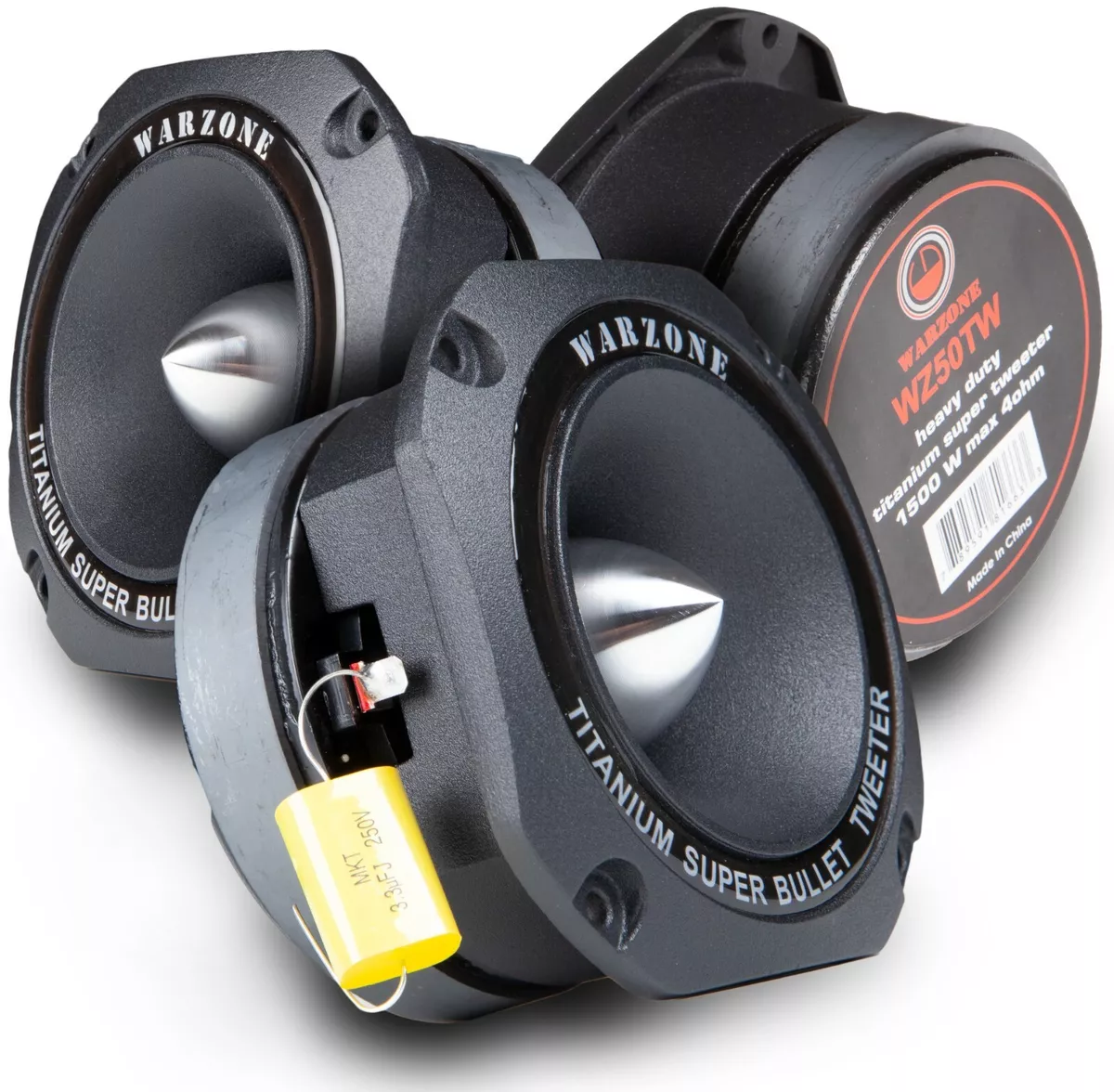
Credit: www.ebay.com
Do Tweeters Make Music Louder?
These drivers can certainly make your music louder by producing high-frequency sounds. But it’s important to note that louder doesn’t always mean better. High-frequency drivers specialize in producing high-range frequencies, while subwoofers enhance the low-frequency sounds, both working together to create a complete sound experience.
Their Role In A Speaker System
Speakers are an essential component of any audio system. They work by converting electrical signals into sound through the use of a diaphragm. A typical speaker system consists of various drivers, including woofers, midrange drivers, and these drivers. While woofers handle low-frequency sounds, and midrange drivers handle midrange frequencies, high-frequency drivers are responsible for handling high-frequency sounds. They specifically focus on the treble range of the audio spectrum.
The Impact Of Tweeters On Sound Quality
These drivers can have a significant impact on the overall sound quality of an audio system. They work by accurately reproducing high-pitched sounds, which is essential for music enthusiasts who desire detailed and natural-sounding music. High-frequency drivers can also enhance the clarity and definition of musical instruments and vocals in the soundstage, improving the listening experience for listeners and music lovers. However, some individuals believe that these drivers make music louder. While this is true to an extent, the main purpose of high-frequency drivers is not to make the music louder but to reproduce high-frequency sounds accurately.
Additionally, turning up the volume excessively to compensate for a lack of treble can damage the ears and lead to hearing loss. To conclude, these drivers are integral components of any audio system. They play a vital role in reproducing detailed and natural-sounding music. While they can make music sound louder, their primary purpose is not to work as a volume booster. Instead, they accurately reproduce high-frequency sounds, which improves the overall sound quality and listening experience.
Frequency Response Of Tweeters
High-frequency drivers can enhance the clarity and detail of high-frequency sounds in your music. But they won’t necessarily make it louder. A tweeter’s frequency response determines how accurately it reproduces higher-pitched sounds. It’s important to choose one that balances power and accuracy for your listening needs.
The Importance Of Frequency Response
Frequency response is crucial in determining how speakers, including high-frequency drivers, reproduce sound frequencies. Generally, human hearing ranges from 20Hz to 20,000Hz, meaning that speakers must be able to reproduce sound within this range. A speaker’s frequency response can significantly impact its sound quality and overall performance.
How They Shape Frequency Response
High-frequency drivers are responsible for reproducing high frequencies, typically ranging from 2,000Hz to 20,000Hz. However, the frequency response of these drivers may vary depending on their design and quality, affecting their ability to accurately reproduce high-frequency music notes.
A poorly designed or low-quality tweeter can damage the sound quality of your music by emphasizing some high-frequency sounds while diminishing others, leading to imbalanced audio output. As a result, it is critical to consider the frequency response of high-frequency drivers when choosing the right ones for your music system.
Why The Right Choice Matters
Choosing the right high-frequency drivers can make all the difference in the quality of your music. To ensure you get the best performance, consider the frequency response of the different types of tweeters available in the market. Typically, there are three types of tweeters: soft dome, ribbon, and horn. These different types of tweeters produce varying degrees of frequency response, and selecting the right one for your system is crucial in achieving optimal sound quality.
In Conclusion
Knowing the frequency response of your high-frequency drivers is a critical aspect when choosing the right ones for your music system. Understand that these drivers play an essential role in reproducing high-frequency sounds, and choosing the wrong one can damage your music’s sound quality. Be sure to select the right type of tweeter with the appropriate frequency response range to ensure you get the best audio performance possible.
Choosing The Right Tweeters
When it comes to improving the sound quality of your car’s audio system, few upgrades are as effective as adding high-quality high-frequency drivers. By delivering high-frequency sounds with greater accuracy and detail, these drivers can bring a new level of clarity and definition to your music. However, not all high-frequency drivers are created equal, and choosing the right ones for your audio system can be a challenge.
Matching Them To Your Audio System
The first step in choosing new tweeters is to ensure they are compatible with your existing audio system. These drivers come in different sizes, shapes, and designs, and not all will work well with every system. Before making any decisions, you’ll need to check the specifications of your current audio system and look for high-frequency drivers that match its power output, impedance, and frequency response.
Factors To Consider Before You Buy
Once you’ve found some high-frequency drivers that match your system, there are several other factors to consider before making a final decision:
| Factor | Explanation |
|---|---|
| Material | The material of the tweeter’s diaphragm can affect its sound quality. Common options include silk, Mylar, and aluminum. |
| Design | High-frequency drivers come in several designs, such as horn-loaded, dome, and ribbon. Each has its own unique sonic characteristics. |
| Sensitivity | Tweeter sensitivity refers to how much sound it produces at a given power level. Higher sensitivity high-frequency drivers require less power to produce the same volume as lower sensitivity tweeters. |
| Crossover | Most high-frequency drivers require a crossover network to separate high-frequency sounds from the rest of the audio signal. Make sure you select high-frequency drivers that are compatible with your existing crossover or plan to add a new one if necessary. |
By taking these factors into account, you’ll be able to select high-frequency drivers that not only work with your system but also suit your listening preferences. Whether you prioritize clarity, warmth, or detail, there’s a pair of these drivers out there that can deliver the sound you’re looking for.
Installation Of Tweeters
Installation of high-frequency drivers is a crucial part of getting the best out of your music system. When it comes to music systems, there’s always a question – Will high-frequency drivers make my music louder?
Where To Mount Them
The positioning of high-frequency drivers in your music system is critical as it can significantly affect the clarity and quality of sound produced. If you are installing high-frequency drivers in your car, then it’s recommended to install them on A-pillars or the doors. In case you’re installing high-frequency drivers in your home, then it’s recommended to install them at ear level, for instance, on top of your bookshelf or in wall brackets near the listening area.
Proper Installation Techniques
The proper installation of these drivers is crucial to get the best out of your music system. Here are some proper installation techniques:
- Use a mounting bracket or fabricate one
- Ensure that high-frequency drivers are facing the listener’s ears
- Make sure high-frequency drivers are firmly fixed and secure
- Connect the tweeter wiring carefully and cleanly to the receiver’s output terminals
- Ensure correct polarity. Positive terminals must connect with positive while negative terminals must connect with negative.
To ensure the best quality music from your system, it’s highly recommended to seek the help of a trained professional to install high-frequency drivers in your vehicle or home.
Now that you’ve learned where and how to install high-frequency drivers, you can enjoy quality sound and an immersive music experience. Will high-frequency drivers make your music louder? Not necessarily – but they will certainly enhance the clarity and quality of sound produced. Invest in good quality high-frequency drivers and proper installation for the best results!

Credit: www.amazon.com
Common Mistakes To Avoid
High-frequency drivers are a popular component of a speaker system as they reproduce high-frequency sounds. However, the task of selecting and installing tweeters can be daunting for many music lovers, especially beginners. By avoiding common mistakes, music enthusiasts can ensure that their tweeters complement their sound system and enhance their music listening experience.
Overpowering The Drivers
One of the most common mistakes to avoid is overpowering your tweeters. While tweeters produce high-frequency sounds, they are not meant to be used as the sole source of audio output. Overpowering your tweeters can result in a shrill and unpleasant sound, which can negatively affect your overall listening experience. To avoid this, ensure that the power rating of your tweeters is compatible with that of your audio system.
Mismatching Drivers And Amps
Another mistake to avoid is mismatching tweeters to your audio system. Different tweeter models have varying power and frequency responses. Therefore, you must select the right tweeter that works well with your audio system to produce high-quality sound. Failure to match your tweeters to your audio system can lead to inconsistencies in sound quality, which may compromise the intended listening experience.
In conclusion, tweeters can significantly enhance the quality of your music by reproducing high-frequency sounds. However, care must be taken when selecting and installing tweeters to avoid common mistakes like overpowering and mismatching them to your audio system. When done correctly, tweeters can make your music louder and more enjoyable.
Frequently Asked Questions On Will Tweeters Make My Music Louder
Do Tweeters Increase Sound?
Yes, tweeters do increase sound. They are designed to reproduce high-frequency sounds that other speakers cannot generate. Tweeters produce crisp and clear sounds and improve the overall sound quality of audio systems.
How Much Of A Difference Do Tweeters Make?
Tweeters make a significant difference in sound quality by producing high-frequency sound. They enhance details and clarity in music, making it more enjoyable. The sensitivity, power handling and design of the tweeter affect its performance. A high-quality tweeter can transform audio experience by reproducing high-pitched sounds accurately.
What Are The Benefits Of Tweeters?
Tweeters offer benefits such as higher frequency response and better sound quality for high-pitched sounds. They also enhance musical details and prevent distortion. By improving sound clarity, tweeters provide a more immersive audio experience for listeners.
Should I Add Tweeters To My Car?
Adding tweeters to your car can enhance the audio experience by providing clear and crisp high-frequency sound. The installation cost and complexity depend on the car’s make and model. If you want a better sound quality with finer detail, you should consider adding tweeters to your car.
Conclusion
Tweeters can indeed make your music louder. But it’s important to use them correctly to avoid potential damage to your audio equipment. It’s imperative to start small and adjust gradually to find the perfect balance between increased volume and the quality of the sound.
Always trust your ears and invest in high-quality equipment to achieve the best results. By following these guidelines, Tweeters can be a valuable addition to any music setup.